
Back to Jordan
February 2026
On our final day in Jordan, we traveled north to an agricultural region near Ajloun, just 25 miles from the Syrian border. We were close to the Hauran region, where our Hourani wheat originates. I carried a quiet hope that we might find someone still growing this remarkable variety—or at least someone who could point us in the right direction.
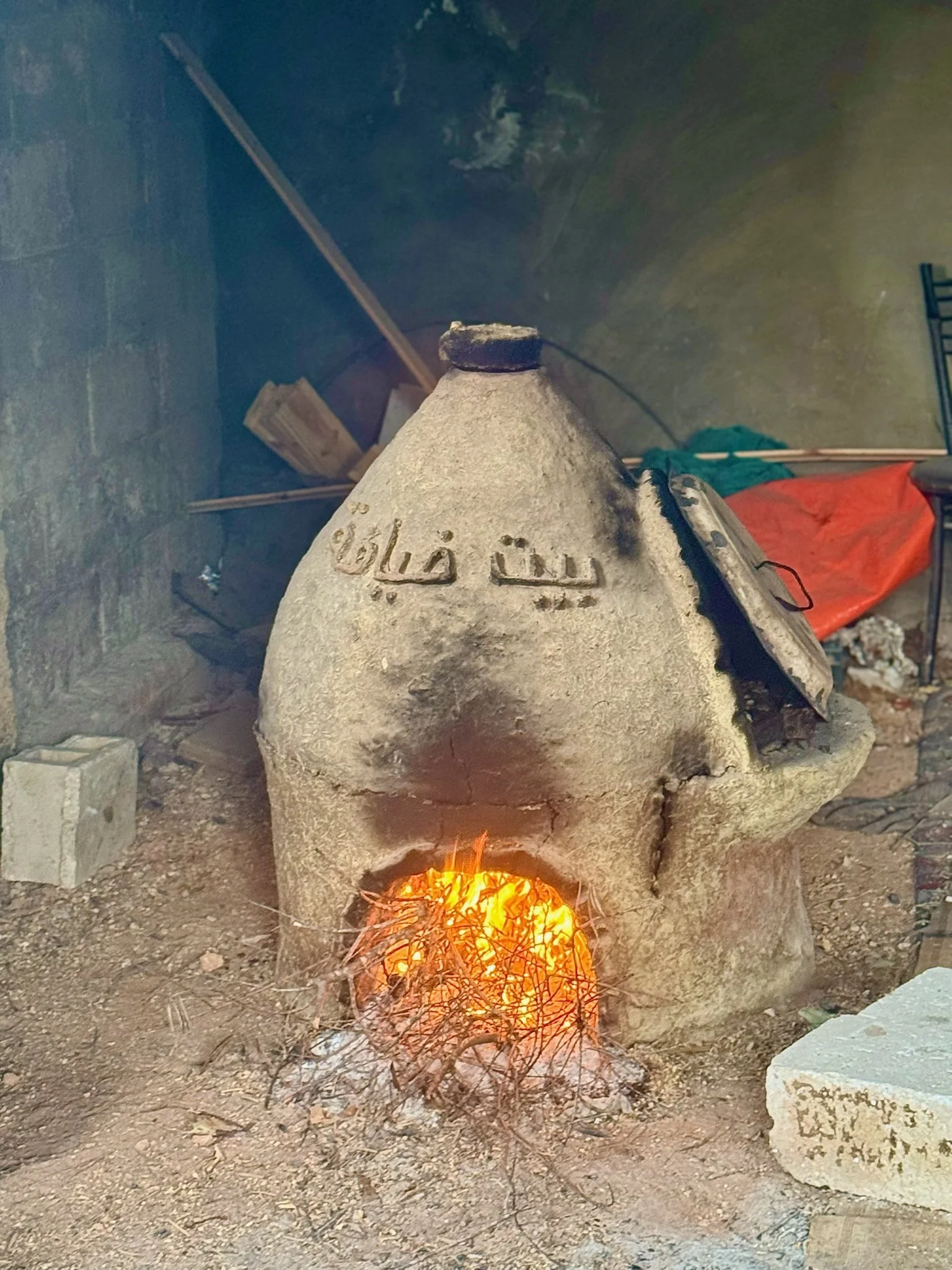
We met Reema and her husband Hamza at their home, where they run a small farm and cookery school. They introduced us to Taboon bread, named for the dome-shaped oven in which it’s baked. We made some of the most delicious bread I’ve ever tasted—bread I could eat every day and never tire of.
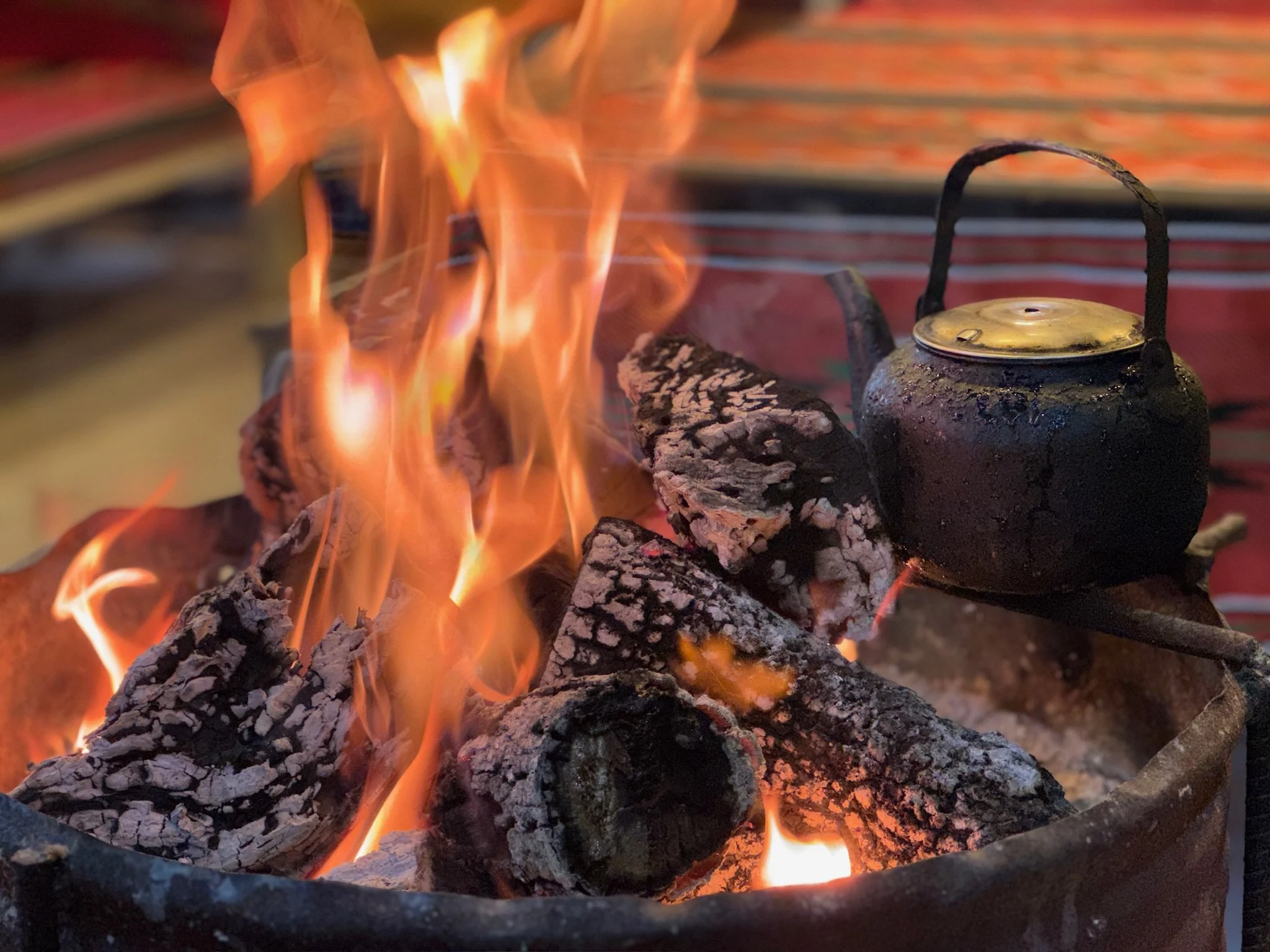
The hospitality of the Jordanian people is incredible. It was a cold day––anticipating our arrival we were welcomed by an open fire warming a pot of tea in their outdoor dining area.
A Taboon oven is a traditional, conical clay oven used for thousands of years across the Arab world. Its domed shape and base of heated pebbles create an intense, smoky heat that produces soft, chewy flatbread with a beautifully dimpled texture. Reema invited me to place my hand near the oven’s opening to feel the heat—it was staggering. The pebbles inside act as a buffer, lifting the bread just enough to keep it from burning.
Even before we began, I sensed a difference in the flour Reema was using compared to what we had seen further south with the Bedouin family. This flour had a richer color—a warm, golden hue. But it was the aroma, as the dough baked, that I recognized as whole grain.
I asked the question I had been holding: where was this flour grown and milled? To my delight, it was local. Grown nearby. Milled nearby. Sadly, it was too late in the day to visit the mill and learn the details of how it was milled and which variety of wheat.
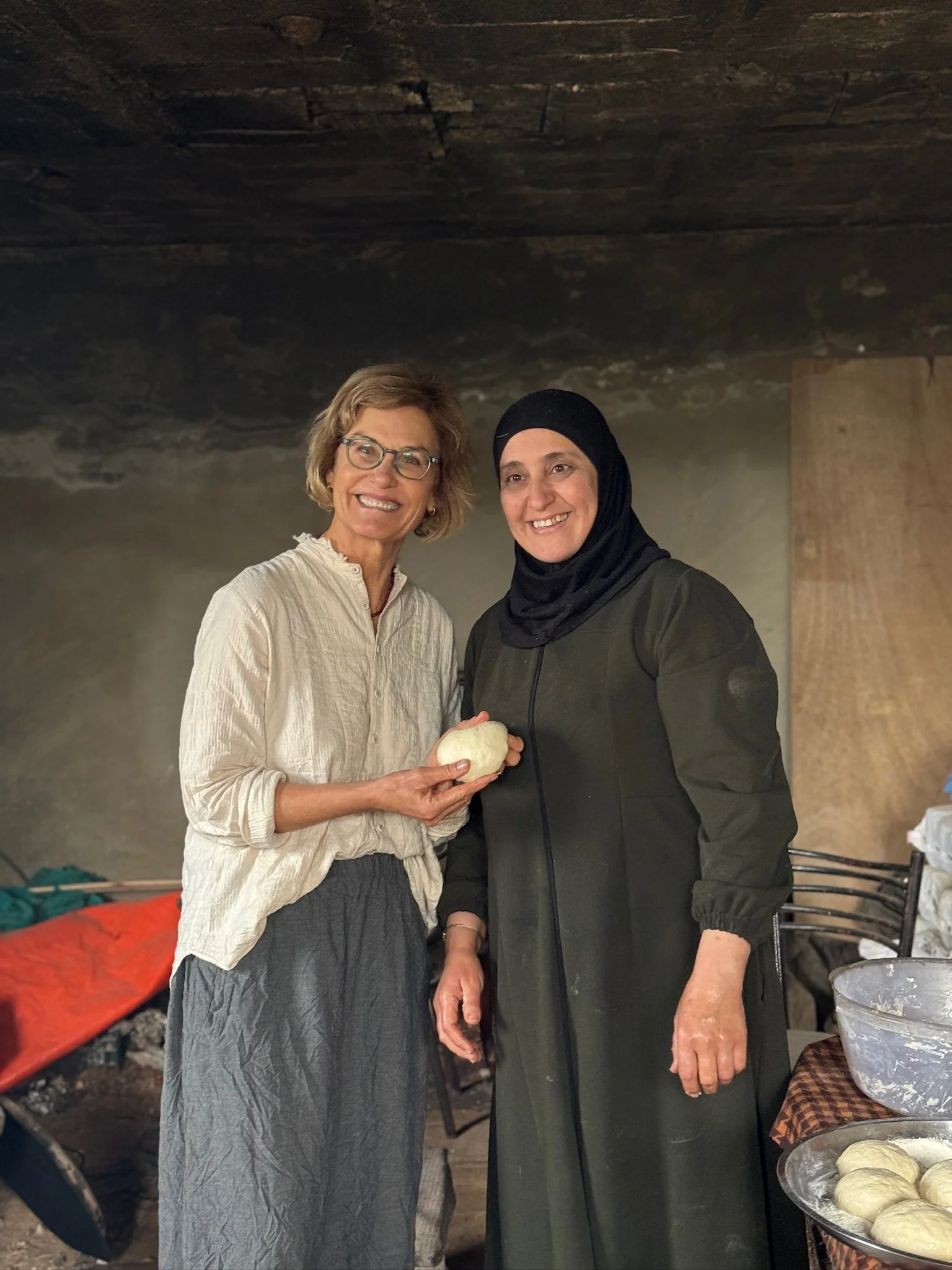
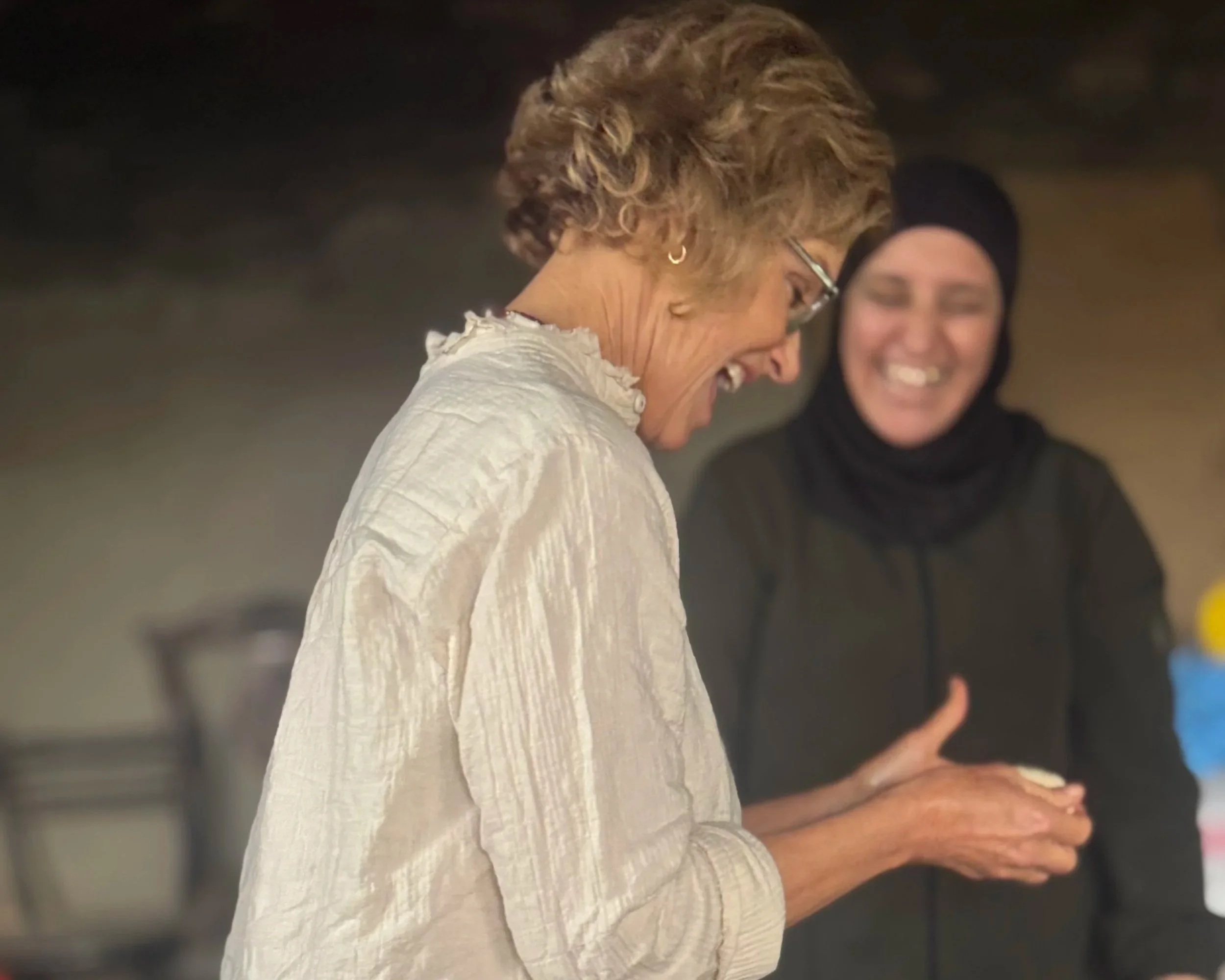
Reema has been making taboon bread since she was a young girl. The dough was already mixed, waiting to be shaped into soft, delicate balls. I tried to follow her hands—fingers gently curving inward—but what she made look effortless carried years of embodied knowledge.
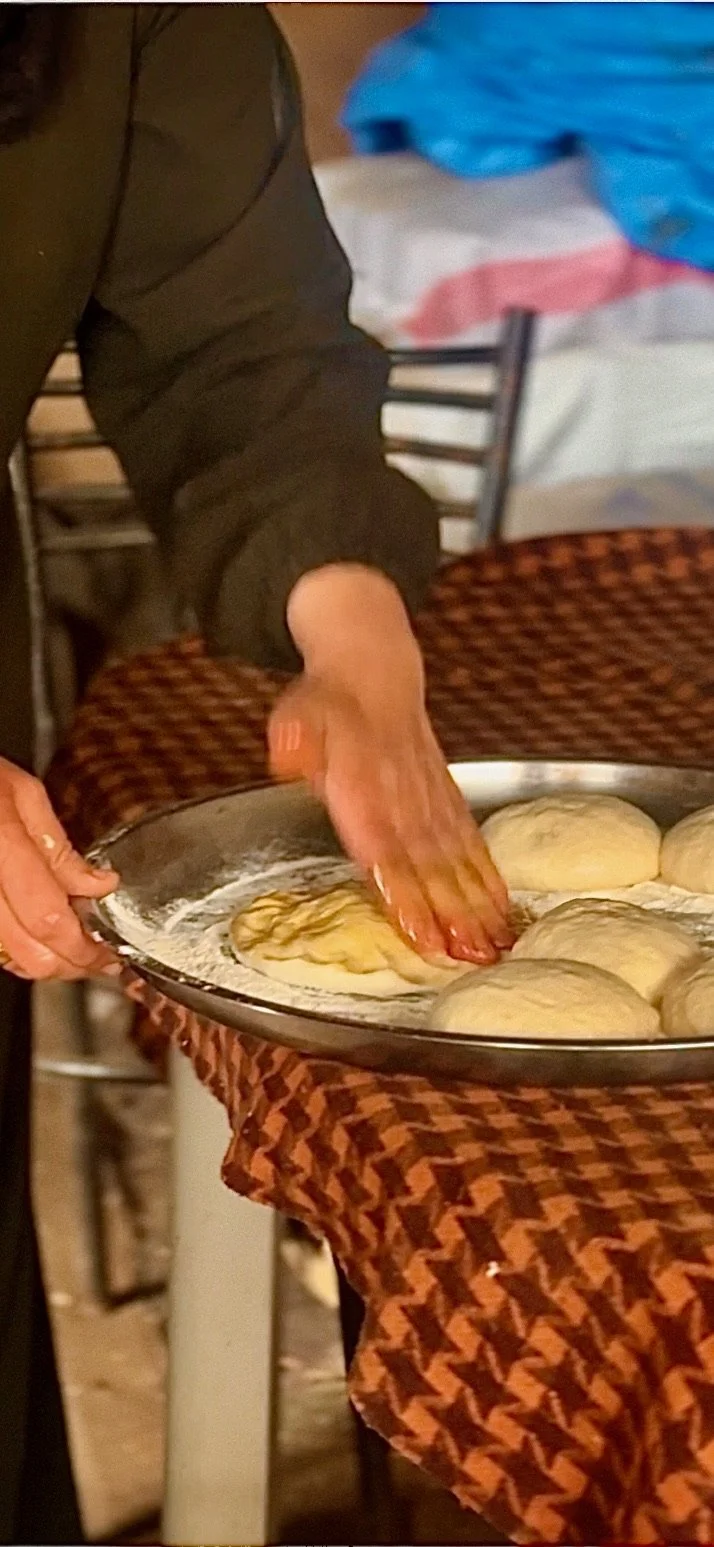
As we shaped the dough, pressing our fingers into its surface, I found myself noticing the imprint of her hands left behind. It felt almost like a blessing—this is how one touches dough to promote its life-giving essence.
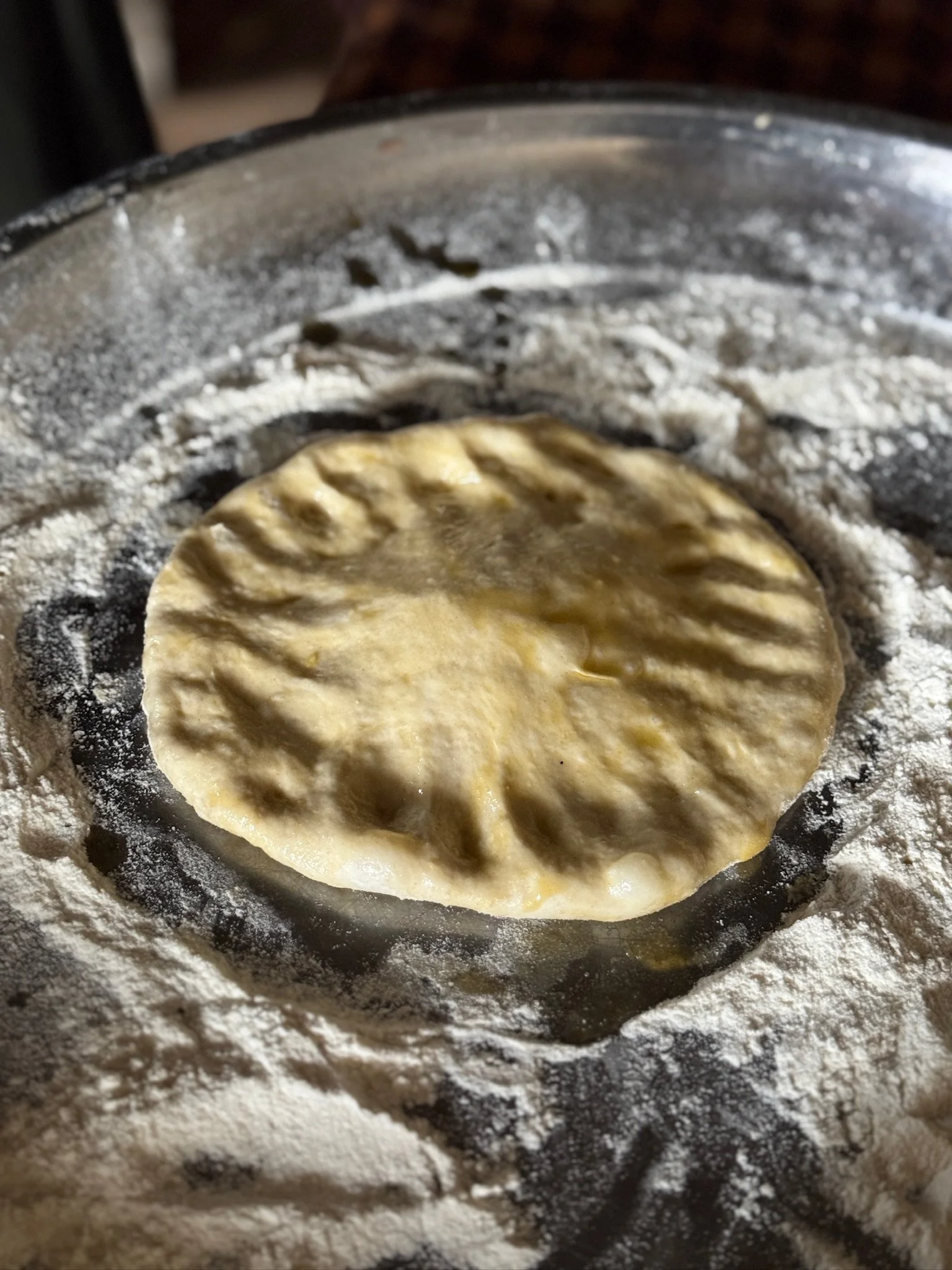
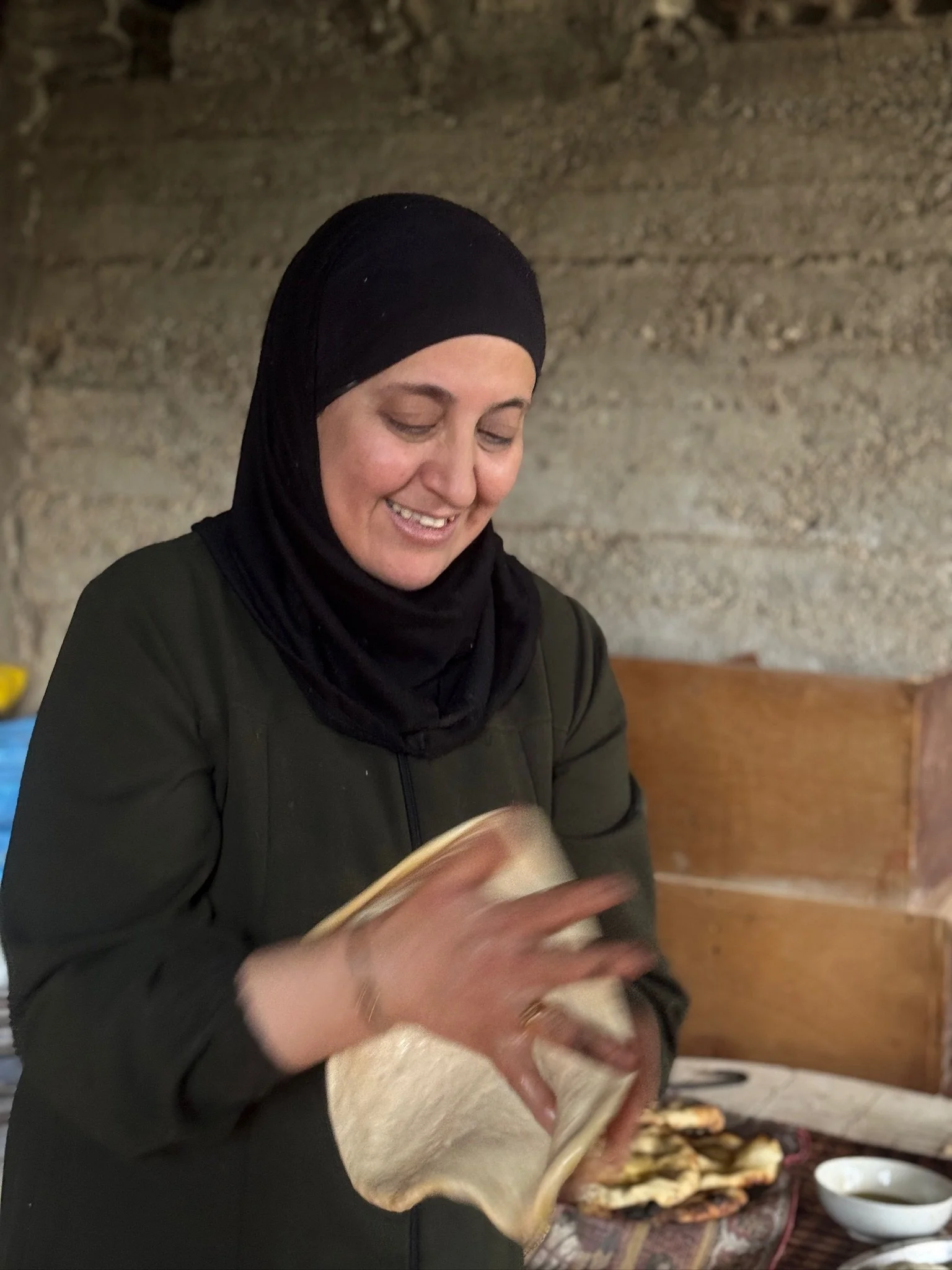
Then came the most challenging step. Reema rapidly slapped the dough between her open palms, stretching it thinner and thinner. It looked simple. It was not. Too much force and the dough would tear. Too little and it would not open.
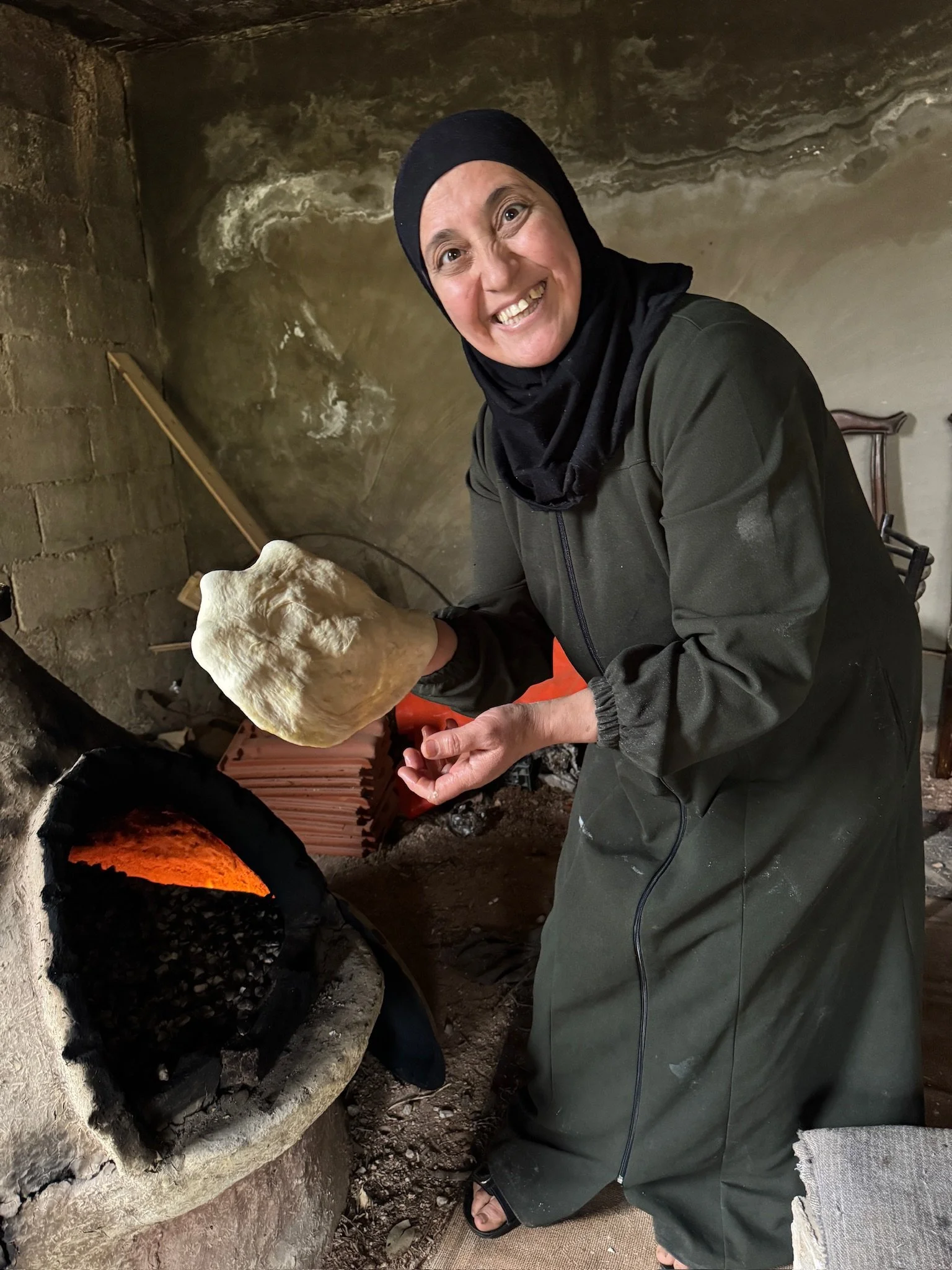
Without any tools, Reema placed the dough directly onto the hot pebbles inside the blazing oven.
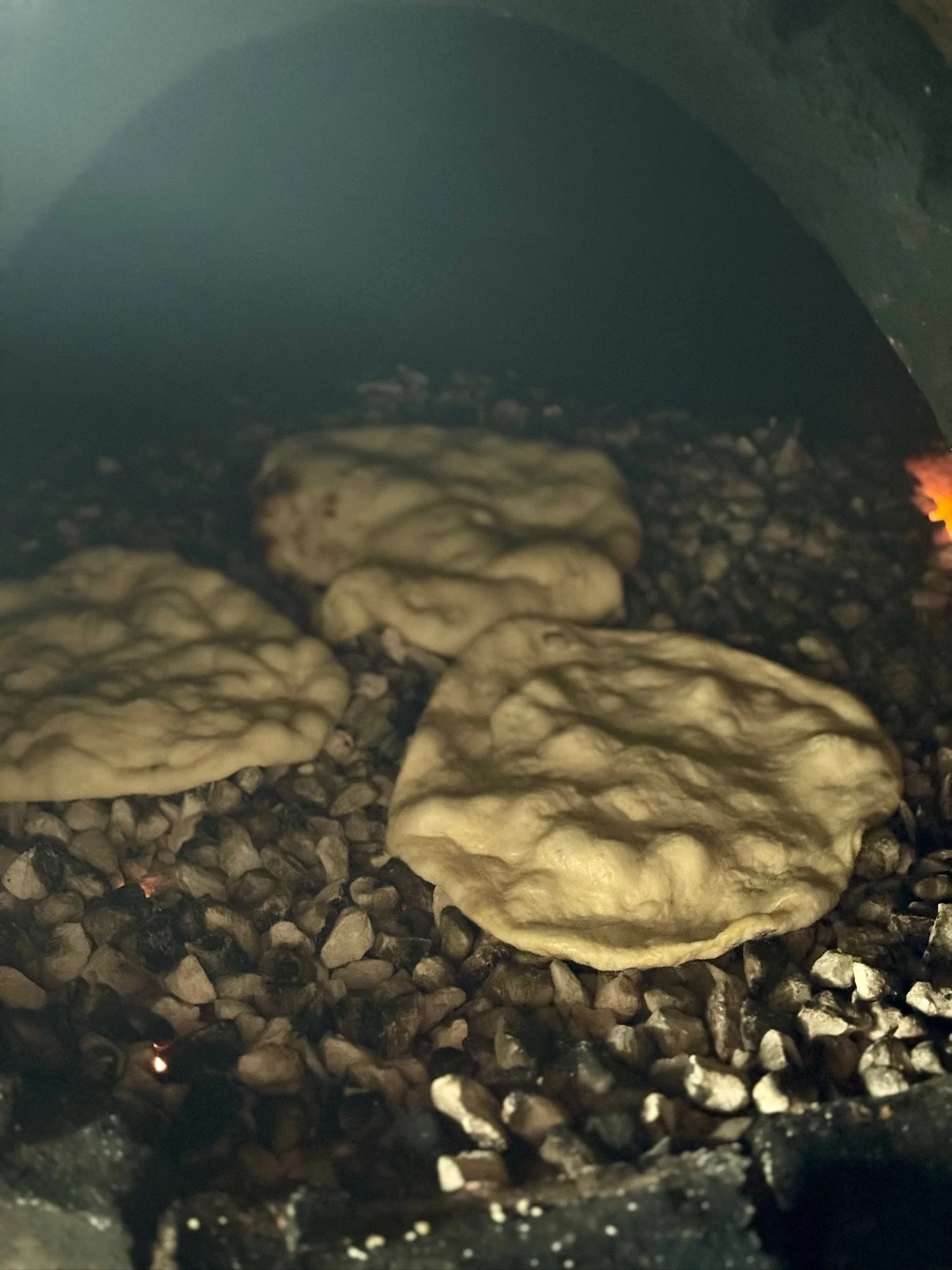
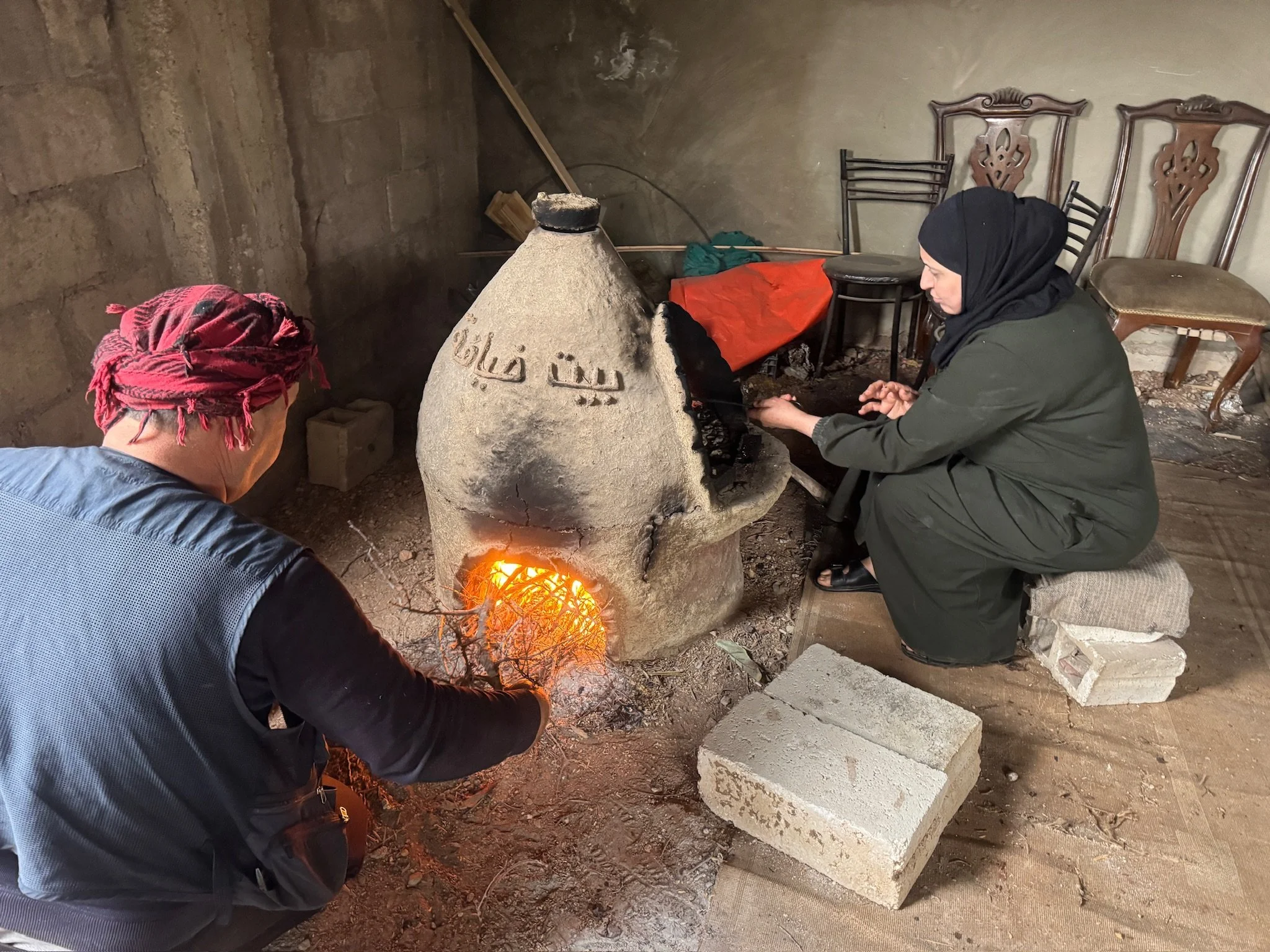
Baking in a Taboon oven is a shared act. One person tends the fire. The other watches the bread, which bakes in less than three minutes. It is attentive work—requiring presence, timing, and care.
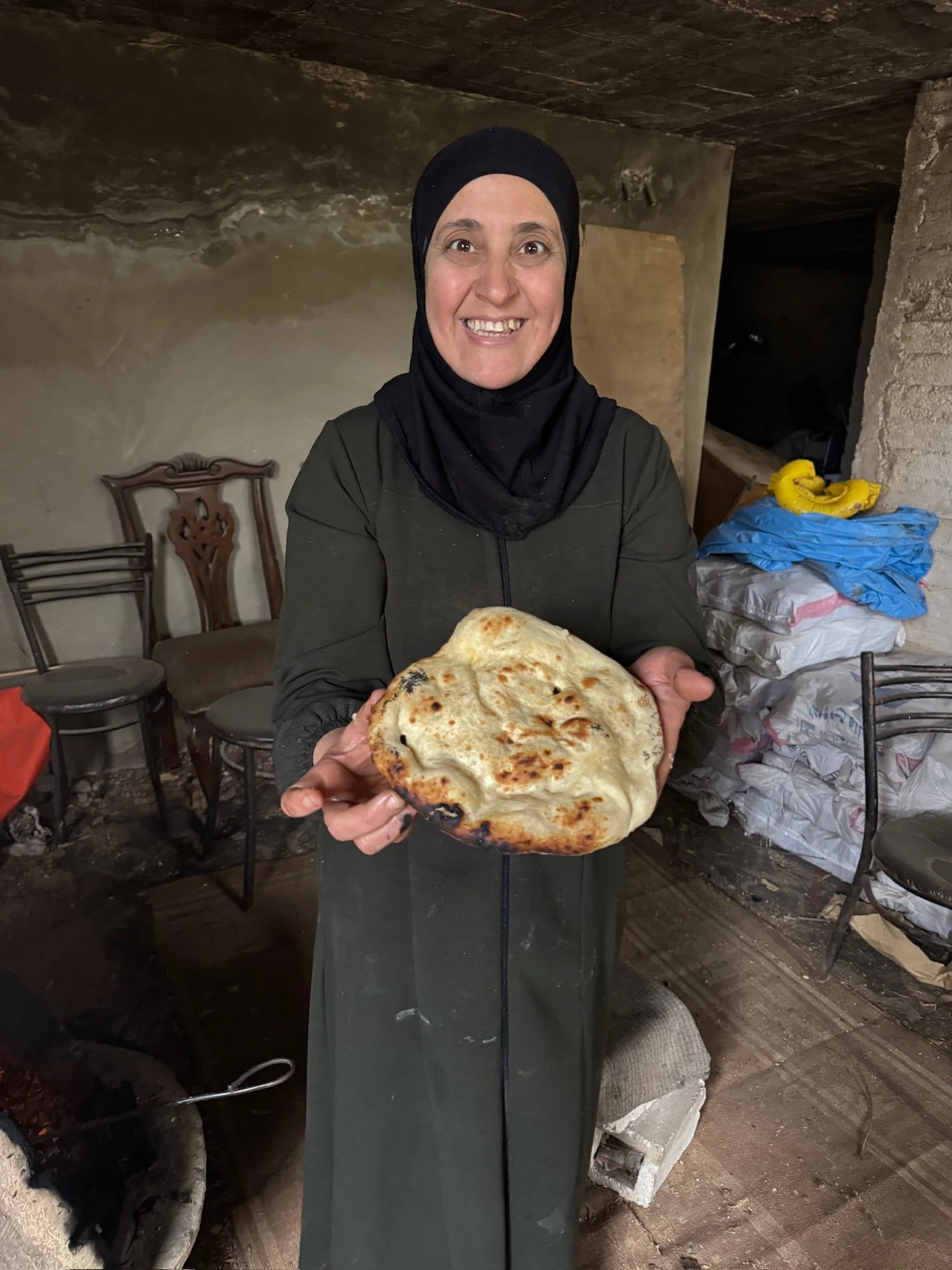
Look at that bread. Look at that joy!
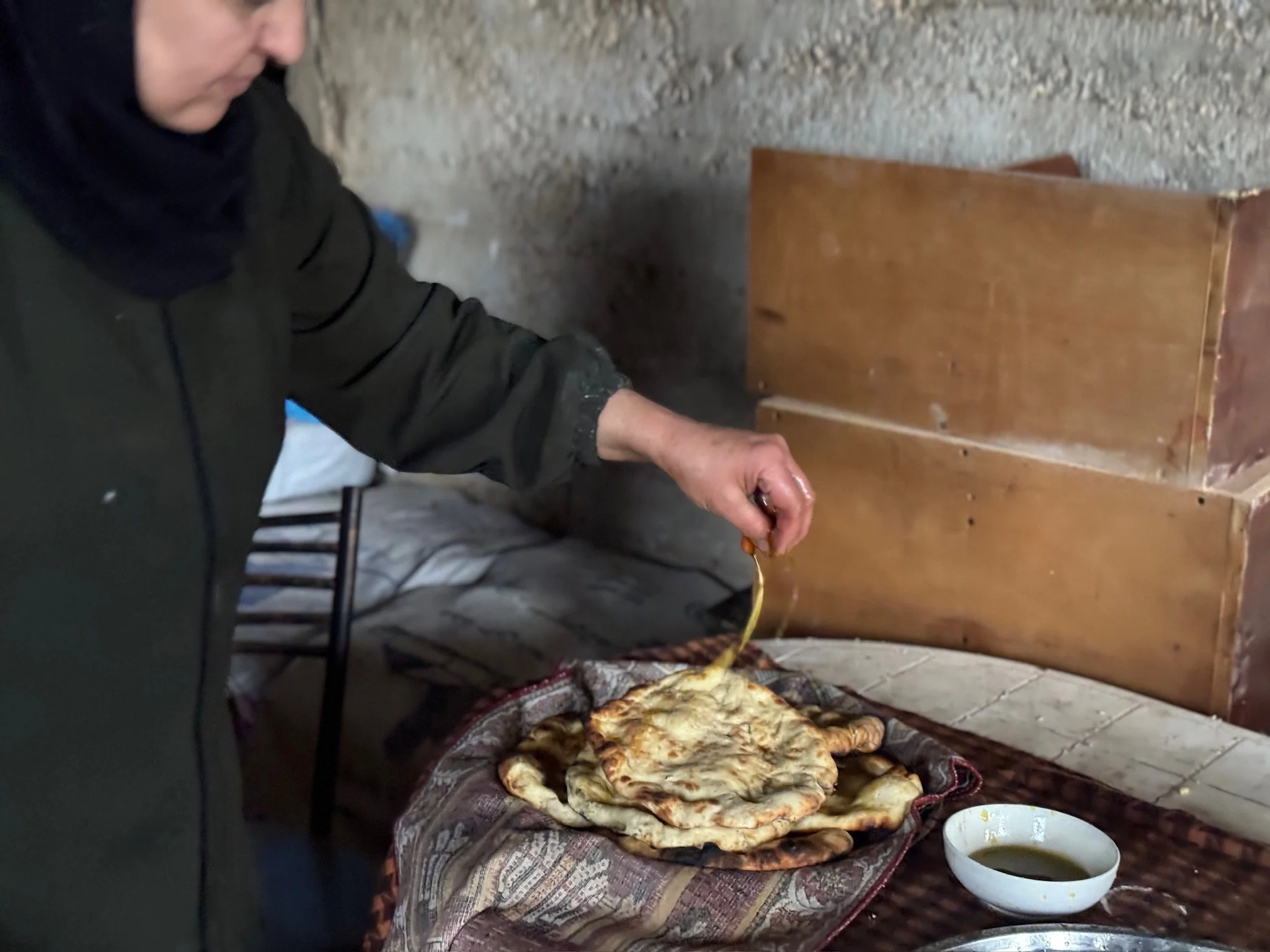
One of the defining qualities of this Taboon bread was the generous use of Reema and Hamza’s olive oil. It was mixed into the dough, drizzled on top during shaping, and again after baking. And yet the bread was not heavy—only rich, alive, and deeply satisfying. I literally could not stop eating it warm from the oven.
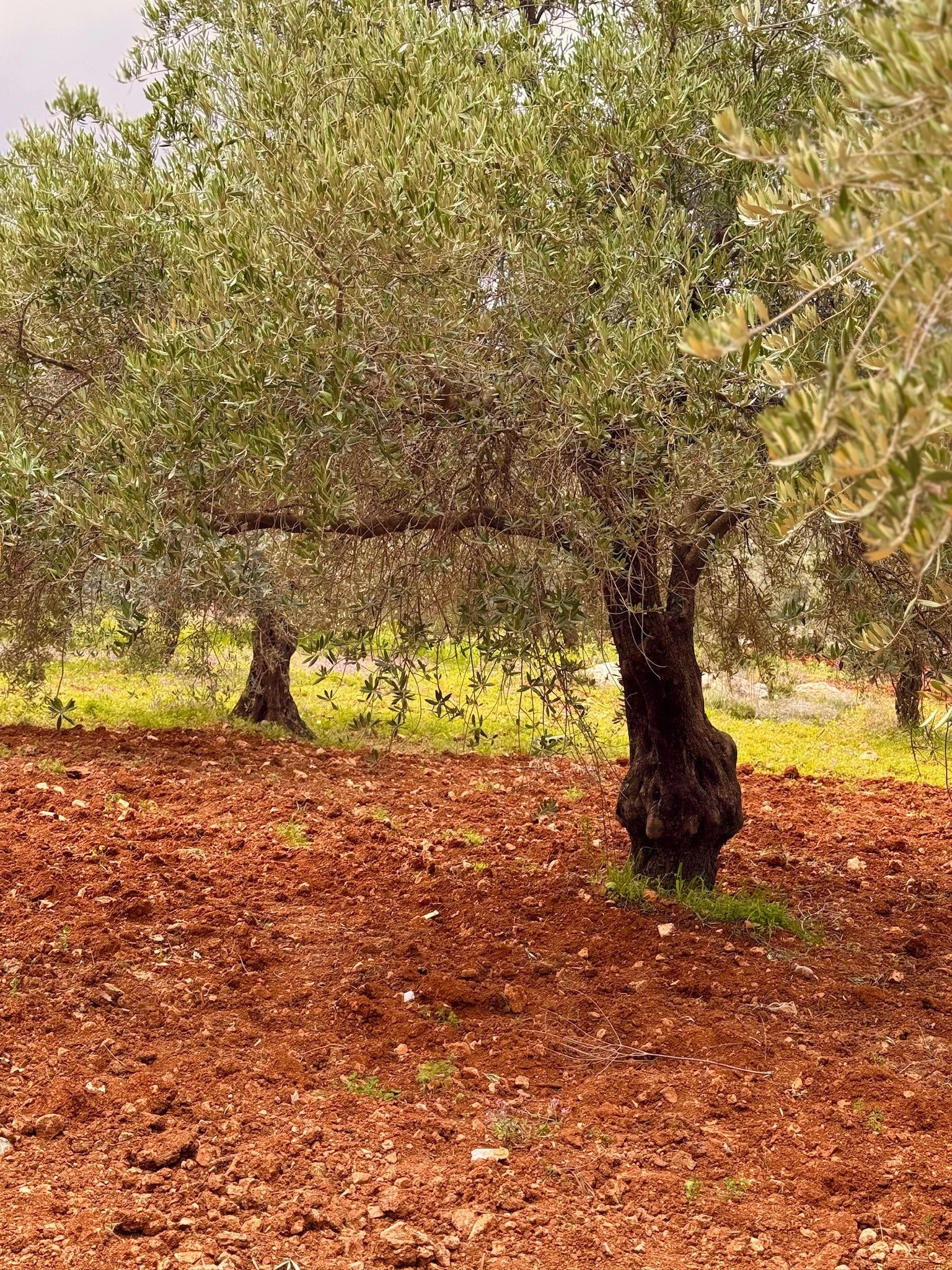
Reema and Hamza’s olive trees surrounded us, rooted in soil the color of red brick, dense with iron and nutrients.
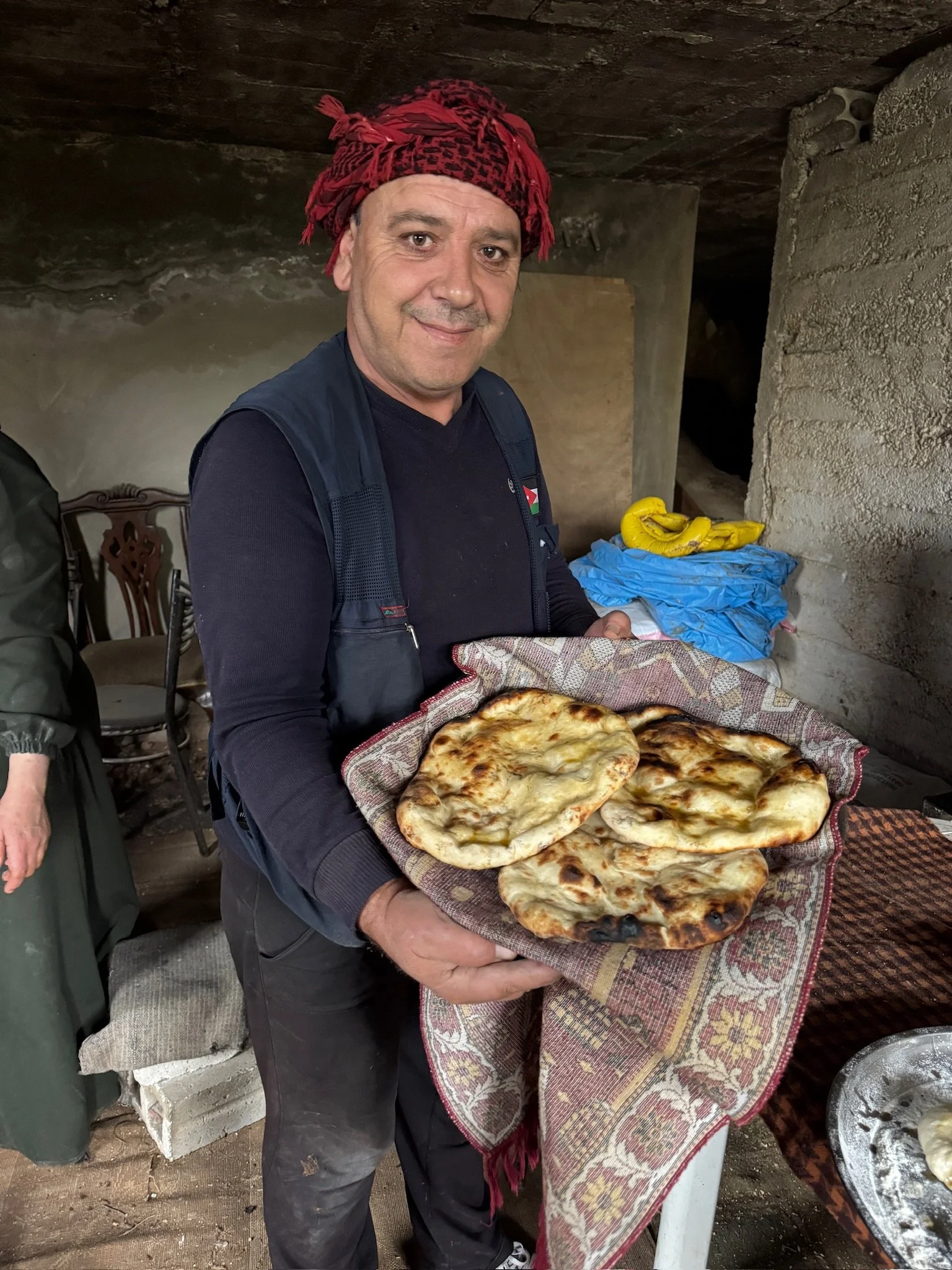
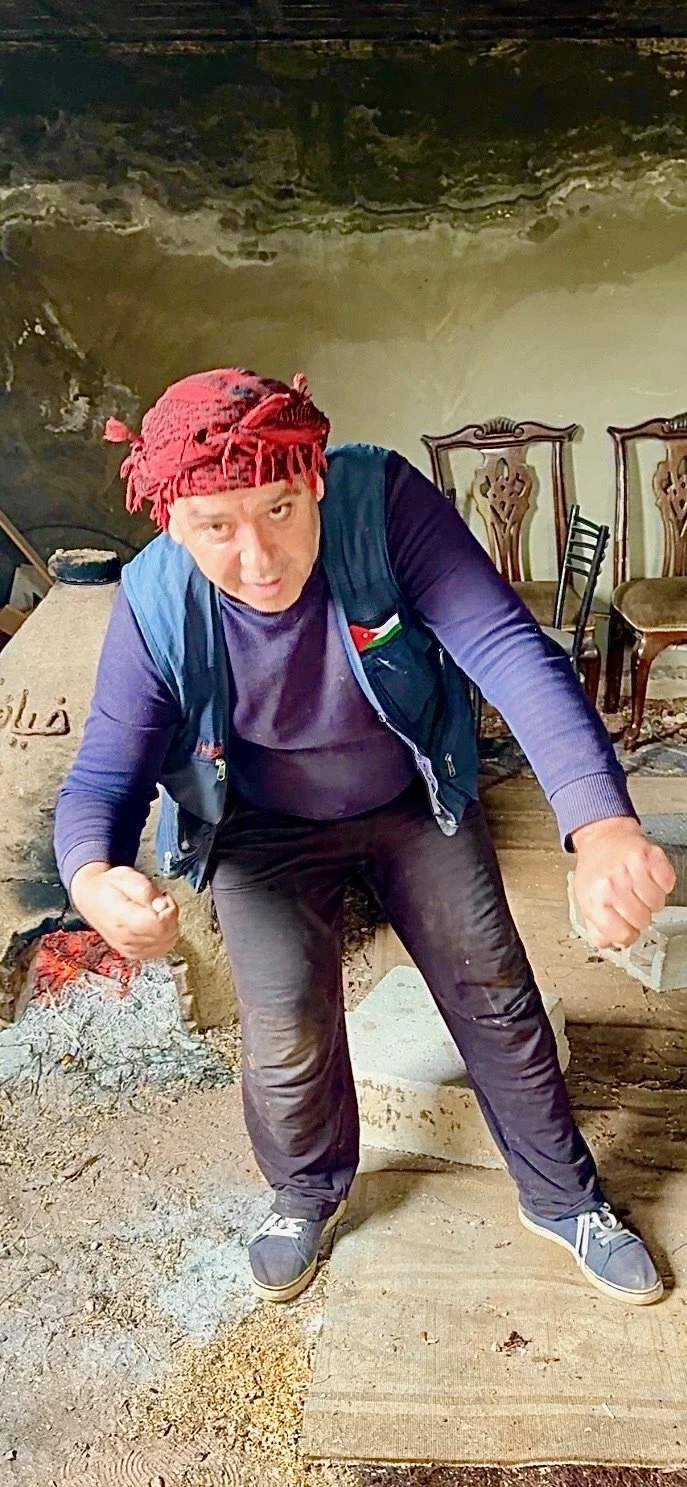
Hamza, gesturing as he sang. Sickle in one hand, wheat in the other.
Through an interpreter, I shared Honoré Farm and Mill’s vision—to rebuild a regional grain economy in Northern California, where wheat is once again grown locally, organically, and stone-milled into fresh flour. I showed photos of our harvest days, people holding sickles and hand-harvesting our Honoré Hourani wheat.
Hamza responded in a way that surprised and delighted us—he began to sing a traditional Levantine harvest song.
As he sang, he demonstrated the familiar gestures: sickle in one hand, wheat gathered in the other. I was struck by how naturally his body knew each movement of harvesting wheat by hand––knowledge passed down across generations.
Here are the words to The Farmer’s song (loosely translated):
My sickle, oh my sickle, it went to the blacksmith to be polished.
He only polished it with a small container, I wish that container were its cure.
My heart worn and tired wants someone to mend it.
They tried to fix it with something small.
I wish that small thing could truly heal it.
The words would shift from singer to singer, but the meaning remains: the sickle must be polished, the work continues, and the human heart—like the land—longs to be restored.
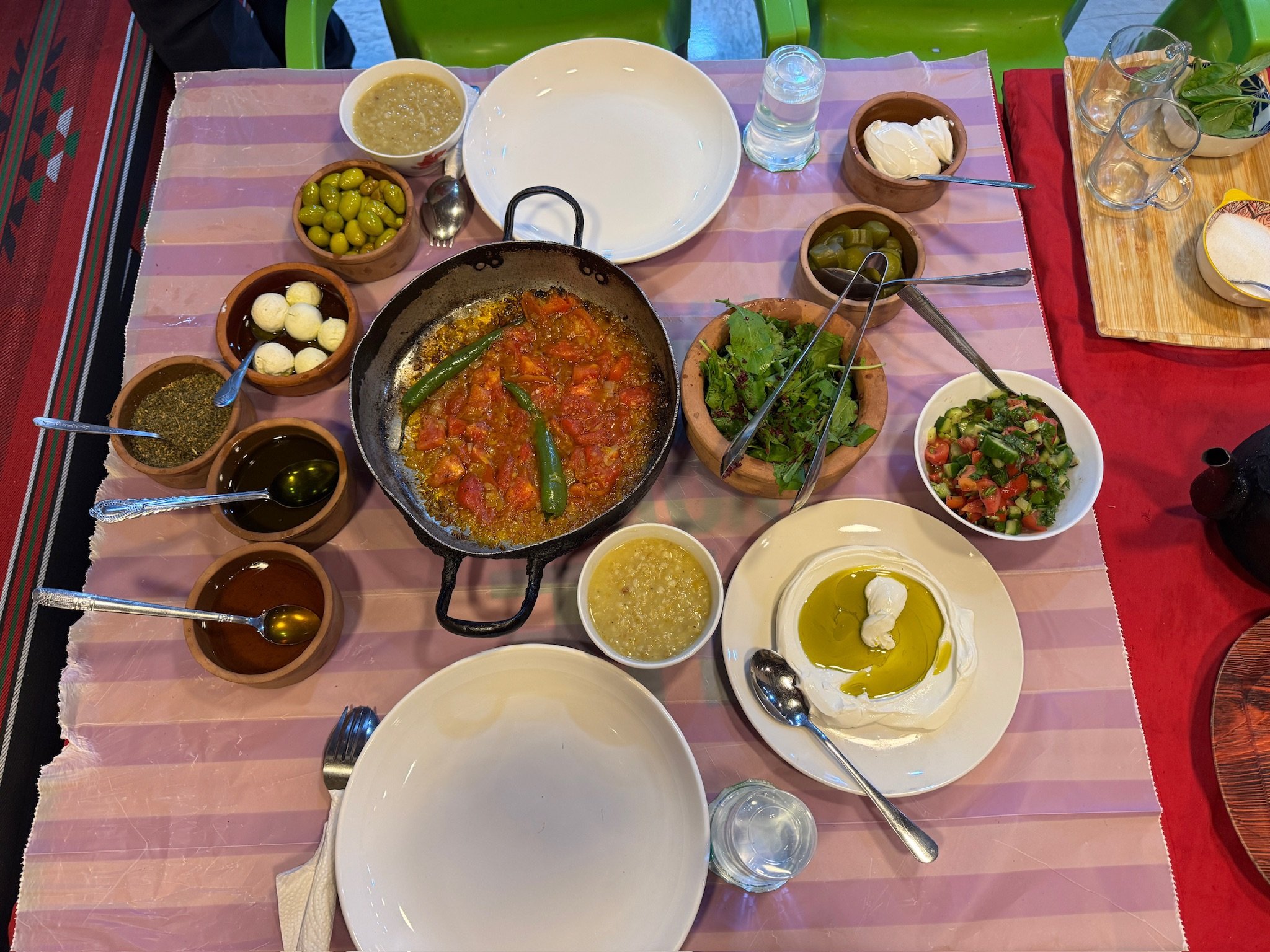
We ended our lesson with the most memorable meal of the trip. Everything came from the land around us and was prepared by Reema and Hanza in their spacious kitchen: yogurt from nearby grazing goats, green-gold olive oil and olives from their trees, smoky roasted tomatoes, soft cheese that melted on the tongue, fresh tabbouleh, dried herbs, honey from their hives, cilantro, pickles, and bowls of warm lentil soup—all meant to be gathered up with the Taboon bread.
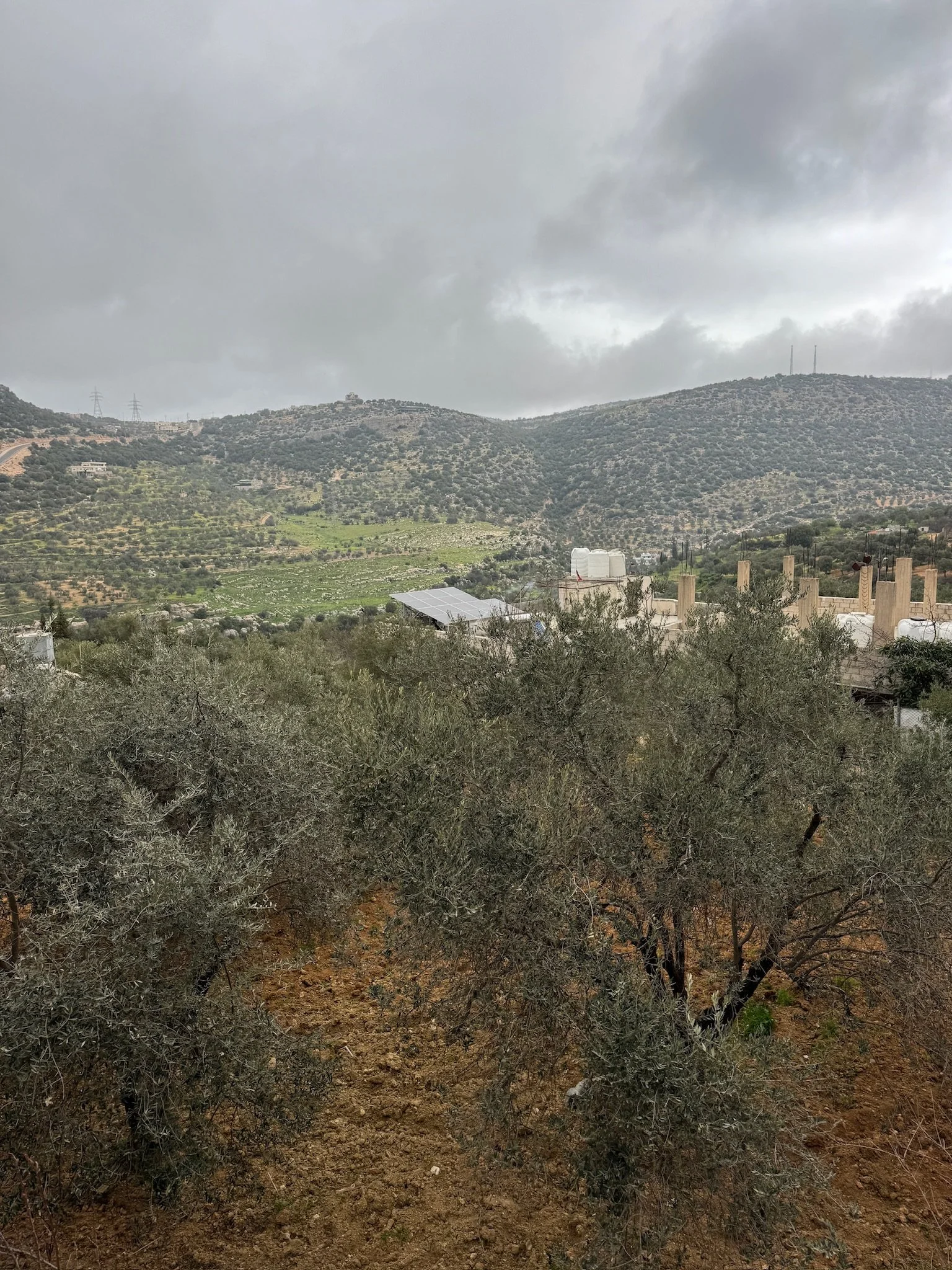
The agricultural landscape of Ajloun stretched around us—fertile, enduring.
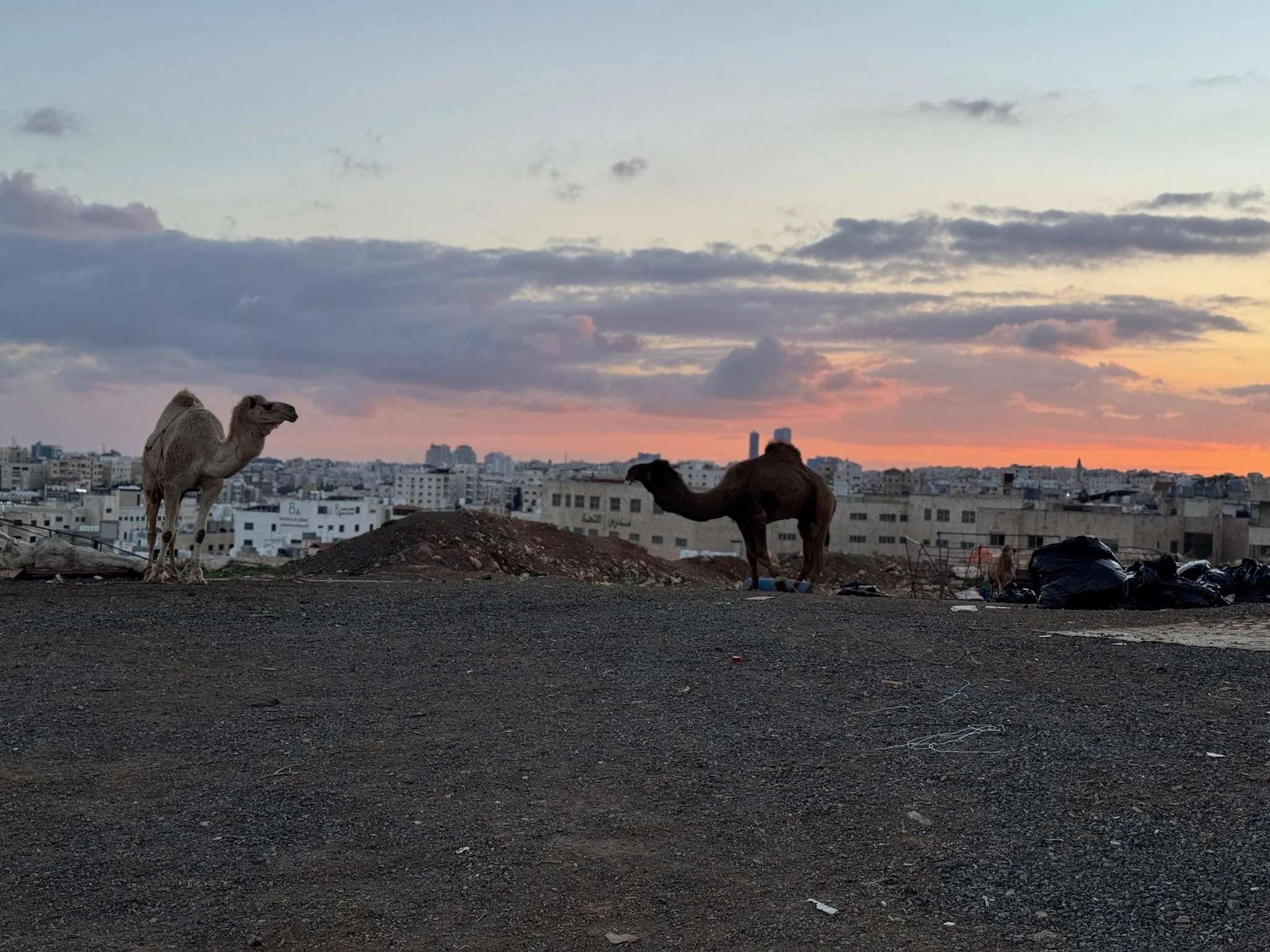
The depth of this ancient culture revealed itself again on our drive back to Amman. Just a mile from the dense city center, camels stood along the roadside. We stopped to greet them and learned from their shepherd that the camel’s milk had already sold out for the day.
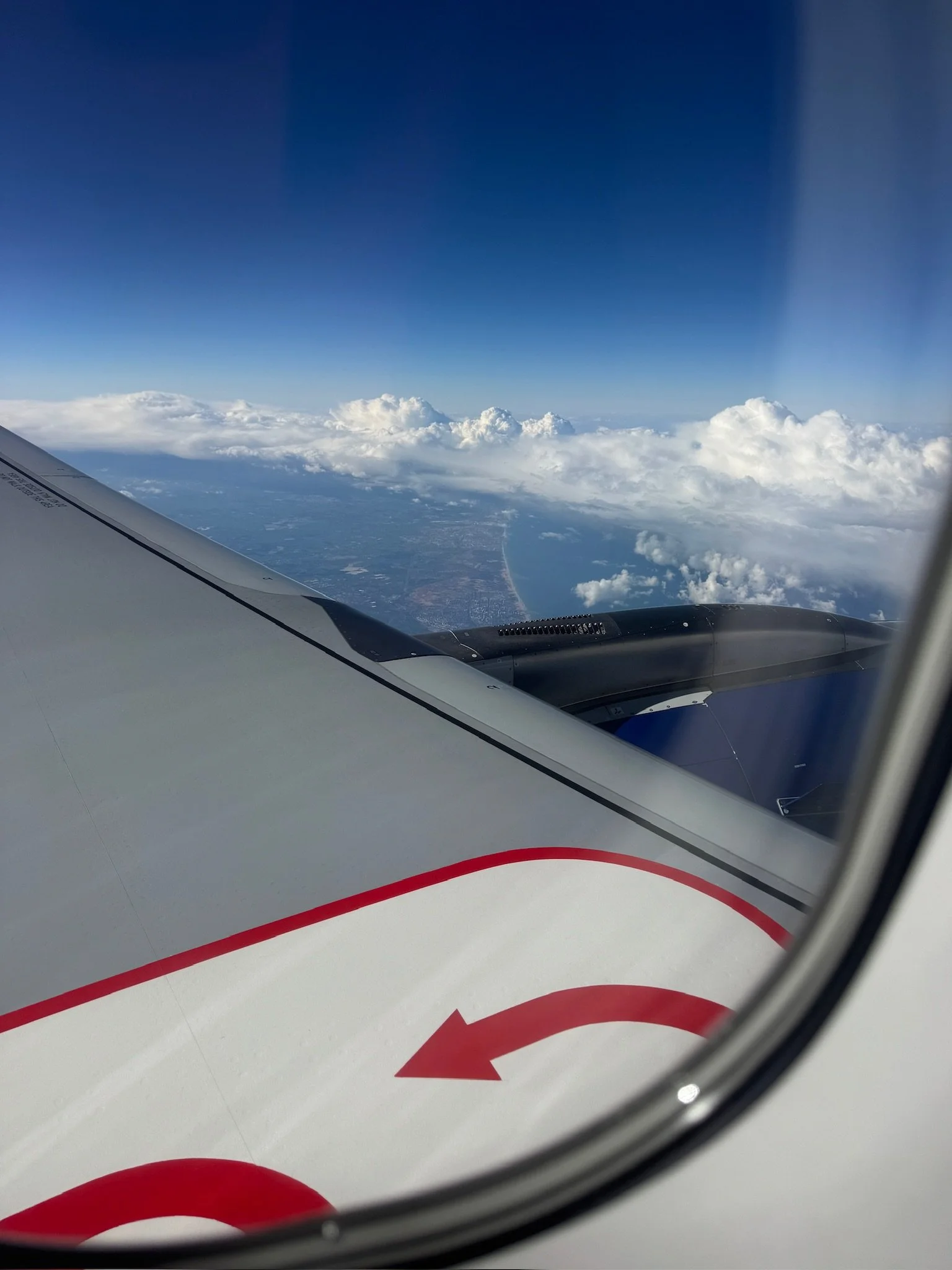
The next day, on our flight, we unpacked the leftovers. As we ate the Taboon bread and mezze, flight attendants served pre-packaged meals to the passengers around us. The contrast was striking—ultra-processed industrialized food beside something humble, whole, and connected to people and place. We laughed as we brushed off a few small pebbles stuck to the underside of the bread.
I cannot wait to return—to meet more of Reema’s community, and to continue the search for Hourani wheat growing in the land that gave it its name.
And to keep building, here at home, a way of growing and eating that remembers what bread truly is: life.
Next stop, Egypt…