
Join me on my trip to Jordan
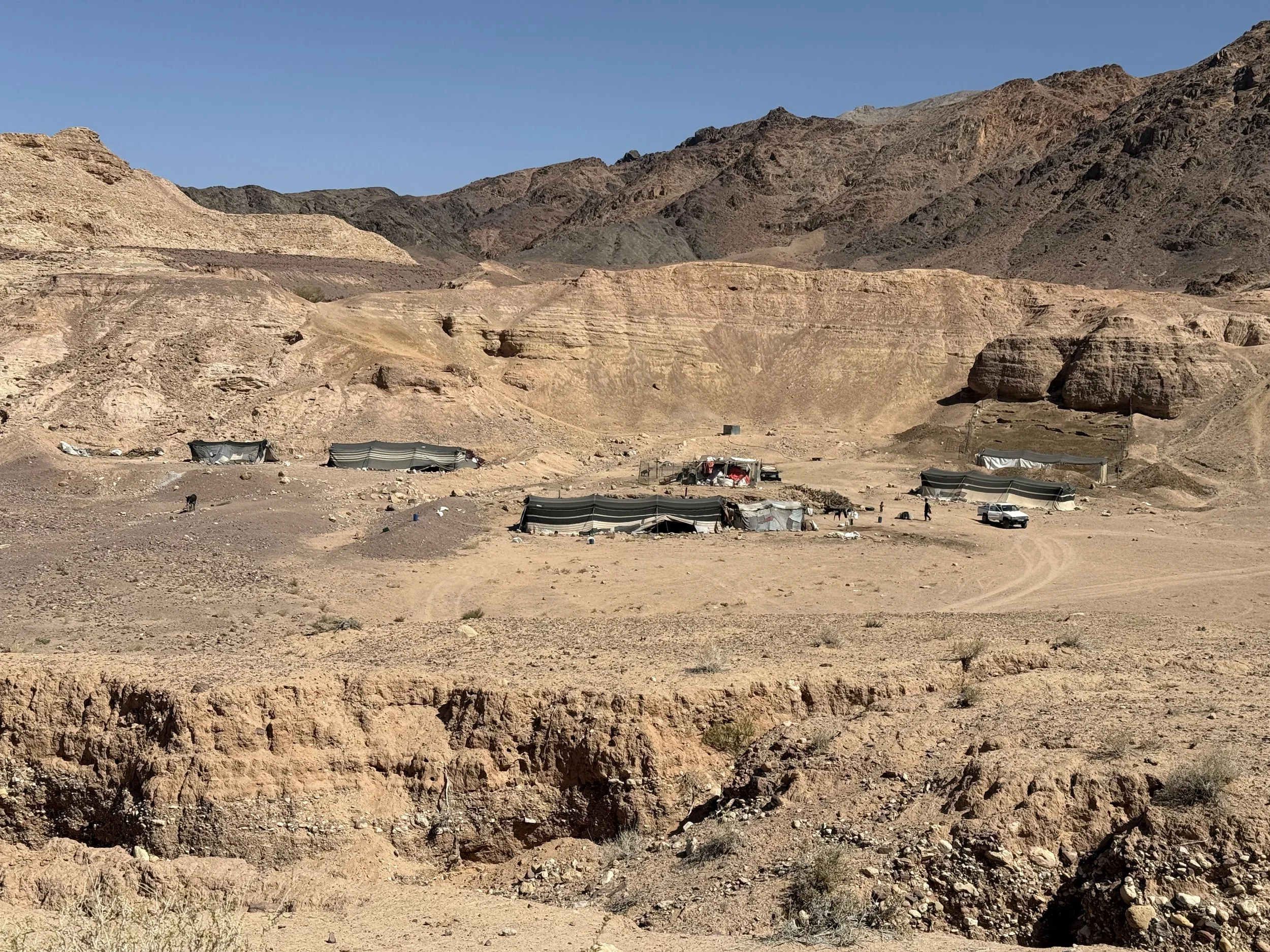
February 2026
For more than a decade, I’ve wanted to visit Jordan. The Hourani wheat we grow traces its roots to northern Jordan—part of a larger region called the Hauran (Ḥawrān), stretching into southern Syria and parts of the southern Levant. This place has always felt like a kind of origin story for our work.
As recently as the 1960s, this region was overflowing with grain—producing twice as much wheat as people needed. A wide variety of wheat grew here, most notably durum; our Hourani is a durum wheat. Durum is a simpler form of wheat than common bread wheat and is easier to digest. It is highly versatile and perfectly suited to the breads that sustain daily life—from thick, naan-like taboon to paper-thin shrak to the now-ubiquitous pita.
The heart of my trip came through bread itself.
I had two unforgettable baking experiences—one with a Bedouin family in Feynan, about 35 miles south of Amman, and another with a couple who farm in the north near Ajloun, just 25 miles from the Syrian border.
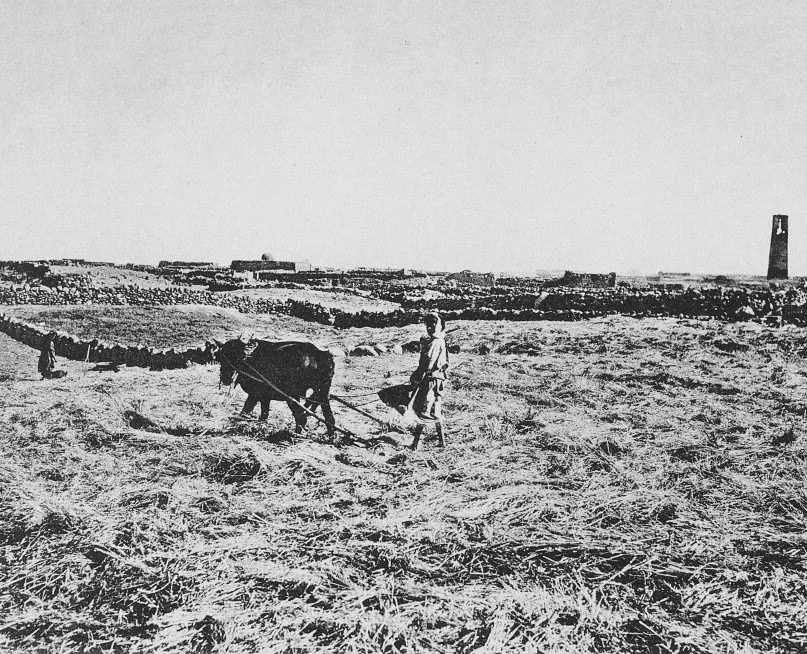
Grain being threshed in 1906. Grain was the chief crop of the Hauran, the cultivation of which led to the region's revival in the second half of the 19th century.
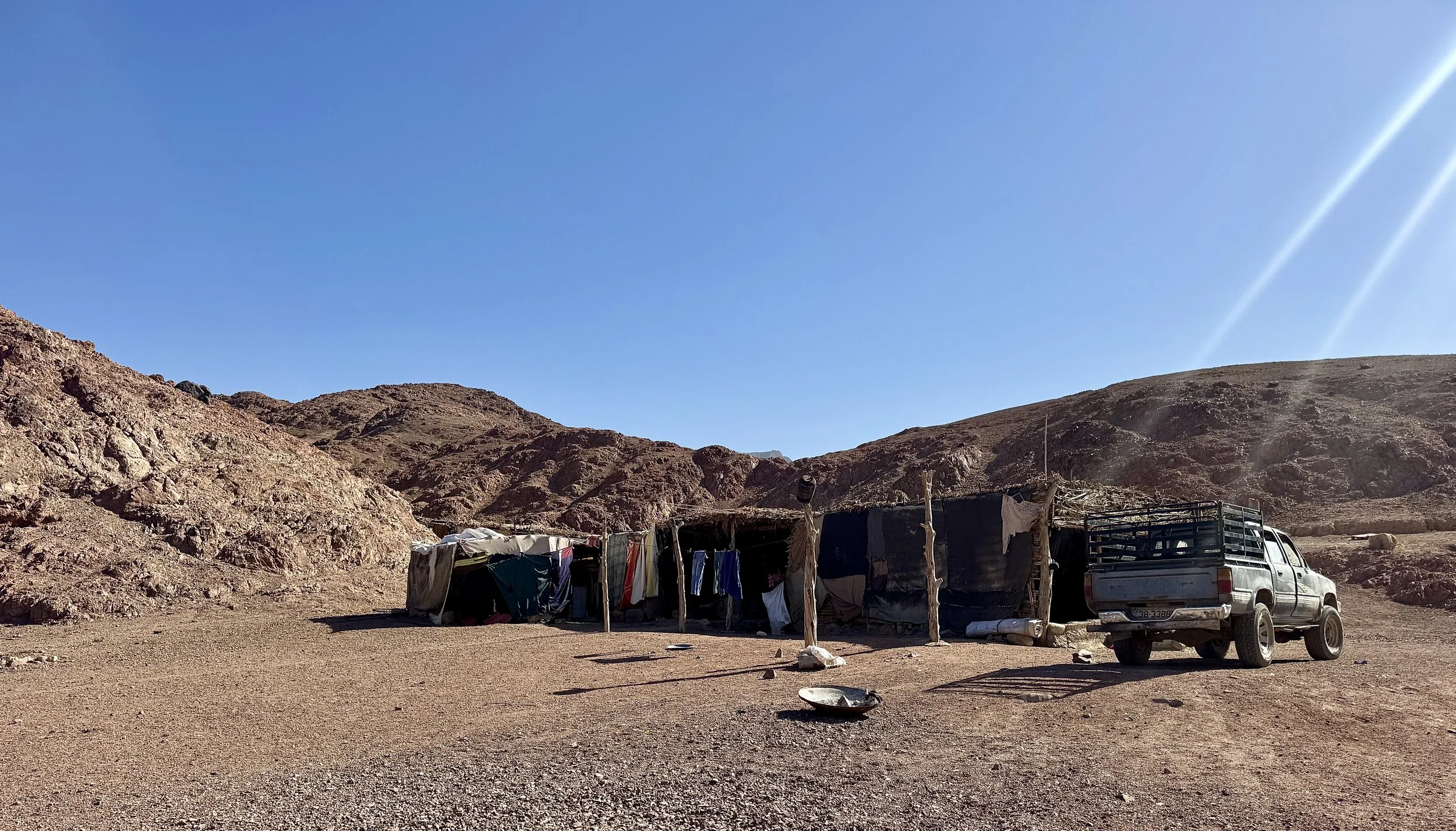
Approaching the Bedouin tent in Feynan, Jordan.
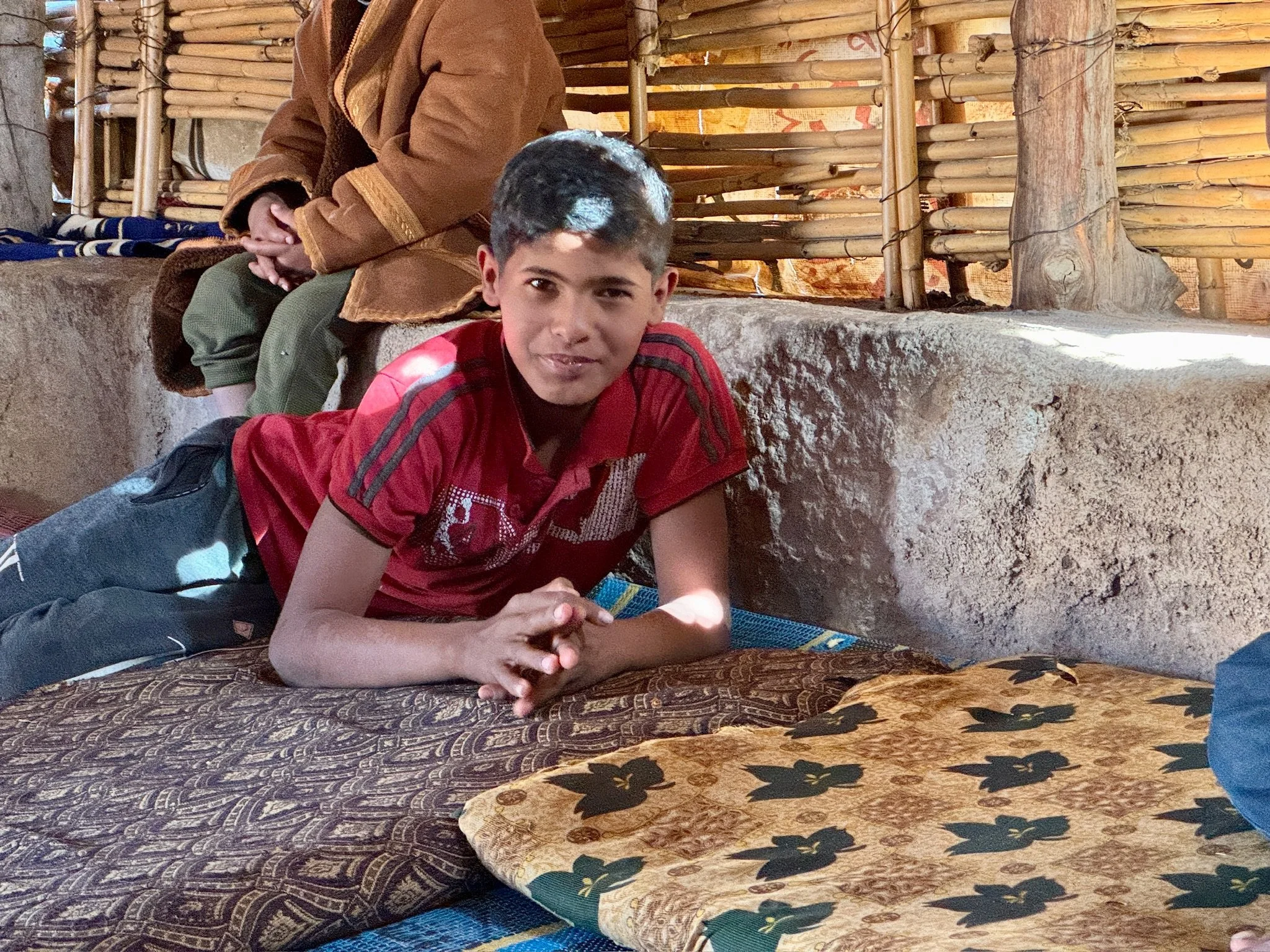
First greeted by Abjulah, 13 years old, who became our de facto host. Full of personality he called himself, ‘King of Jordan.’ We were absolutely enamoured by him.
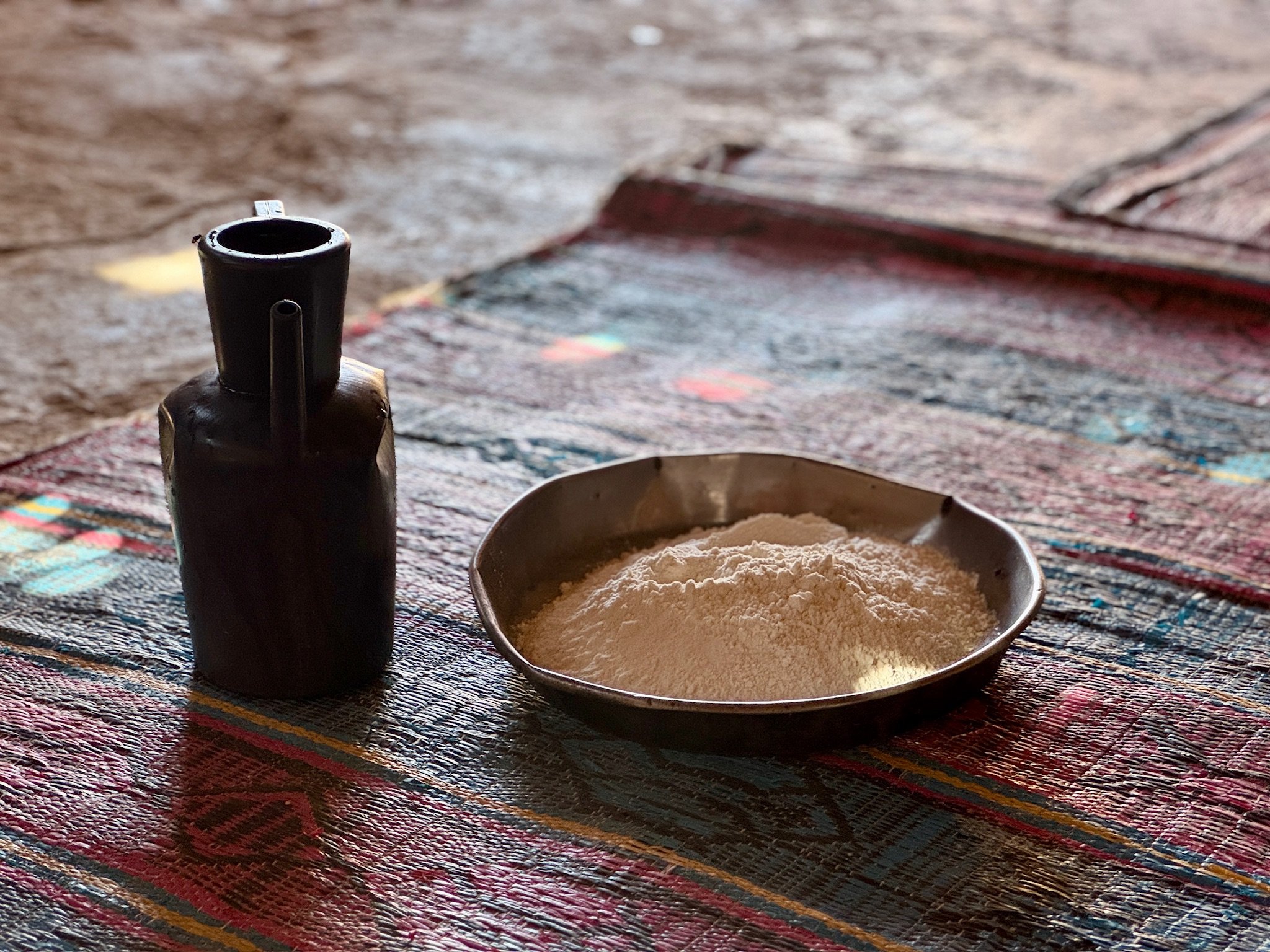
Set on the floor were two vessels, one holding the flour and the other the water to make the bread.
There is nothing quite like stepping off a dusty road—hot sun overhead—into a desert tent shaped by generations who understand how to live with this land. We removed our shoes and stepped onto a pristine woven carpet, settling onto firm, supportive pillows arranged along the edges. Inside, the air was cool, the light soft—filtered gently through the tent’s opening. It felt both simple and deeply intentional.
In Feynan we made a traditional Bedouin bread called arboud—a humble, ancient flatbread of flour, water, and salt.
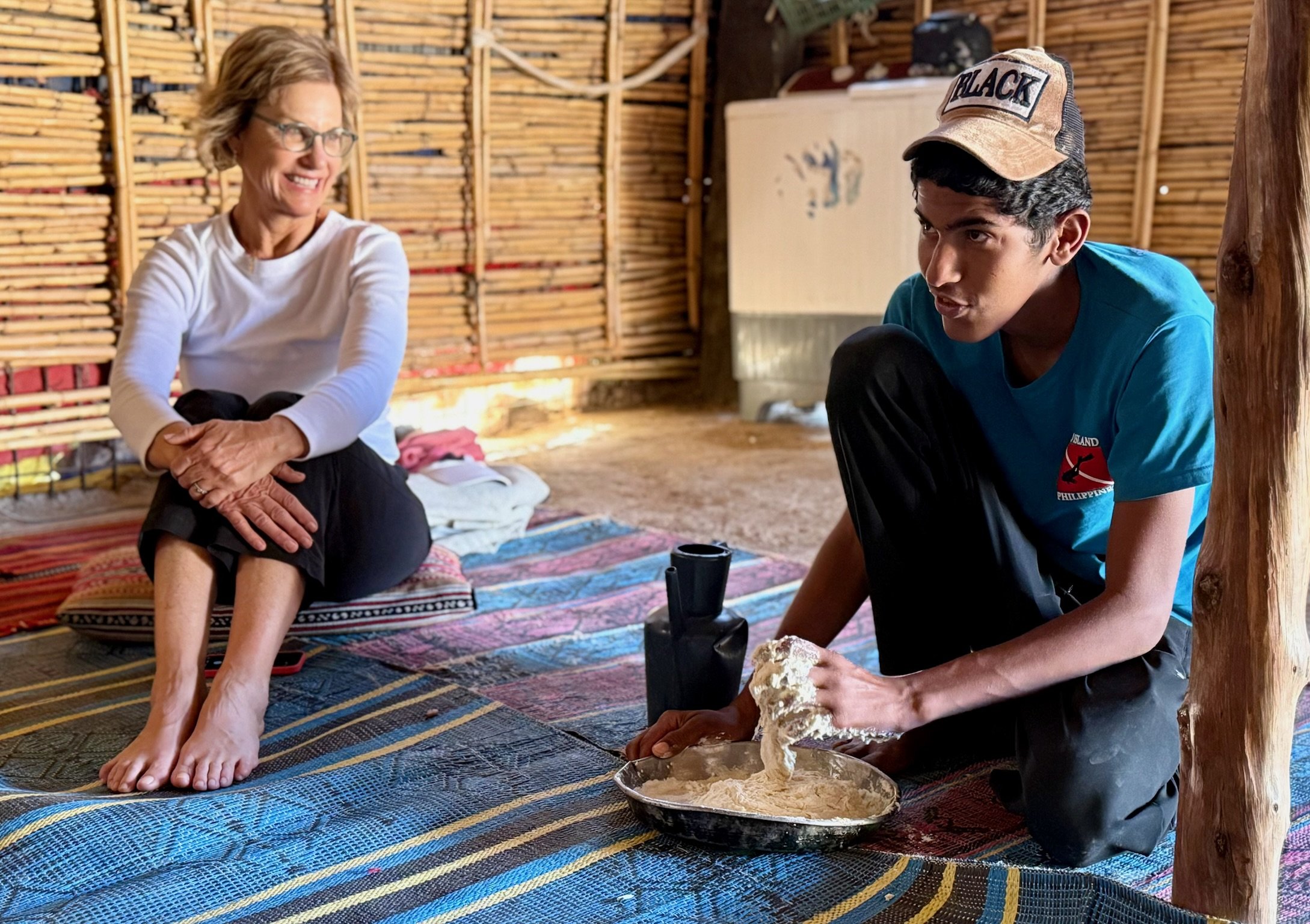
Our baker was Abjulah’s older brother, Amin. A quiet teenager who had been baking for four years.
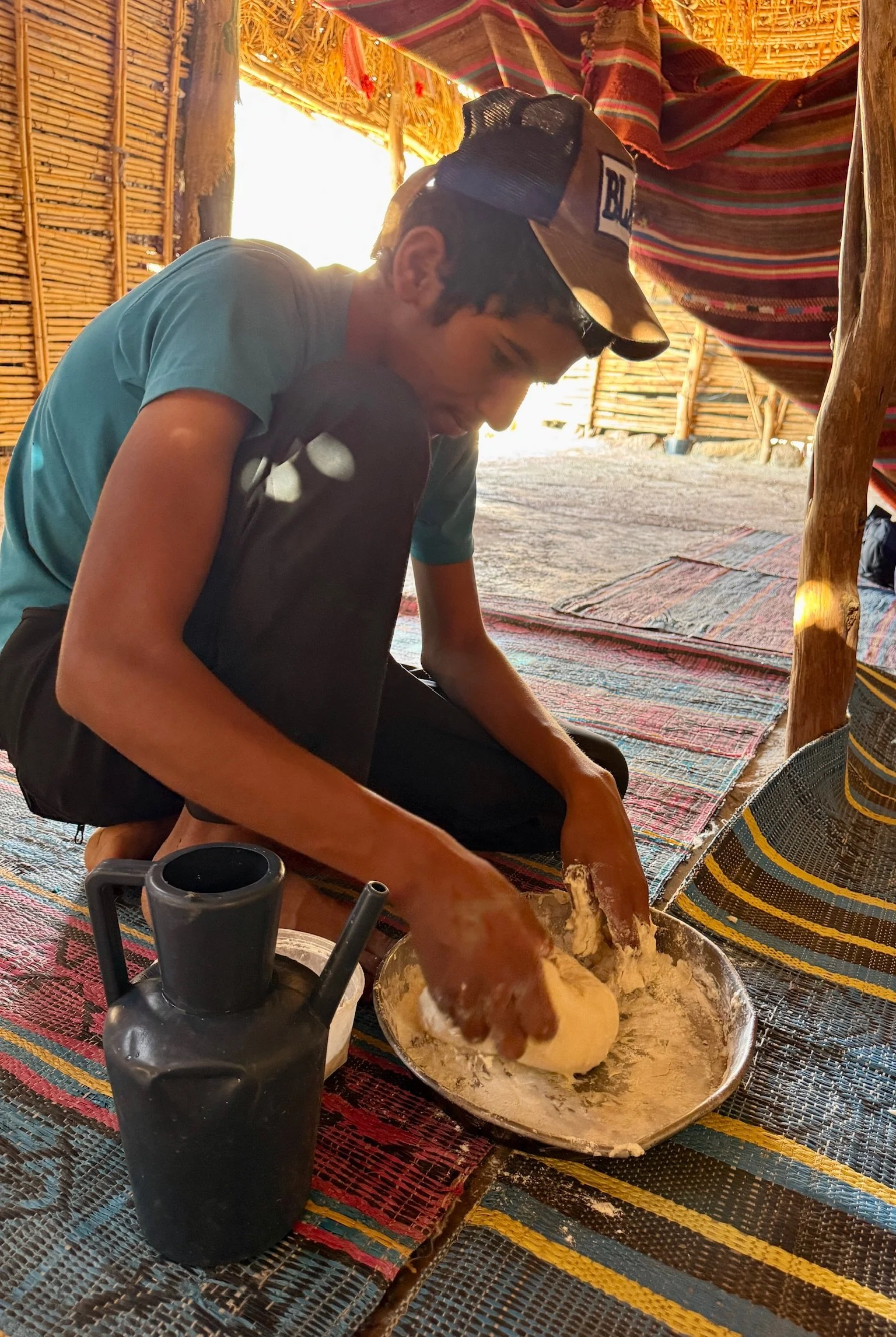
No recipe, no measuring, he baked by the feel of the dough, adding more water when his hands told him it was needed.
As I watched Amin handling the dough, I wondered where the flour originated. I asked our guide, also called Amin, if he knew the origin of the flour. Without hesitating, he told me it was most likely white flour, imported from the United States.
Sitting there, in the very region where Hourani originated, we were baking with flour that had traveled thousands of miles—disconnected from its own landscape, its own story.
It struck me that this is not just about Jordan.
White imported flour has become part of a broader shift—toward a more industrial, Western-facing food system that is increasingly disconnected from the land.
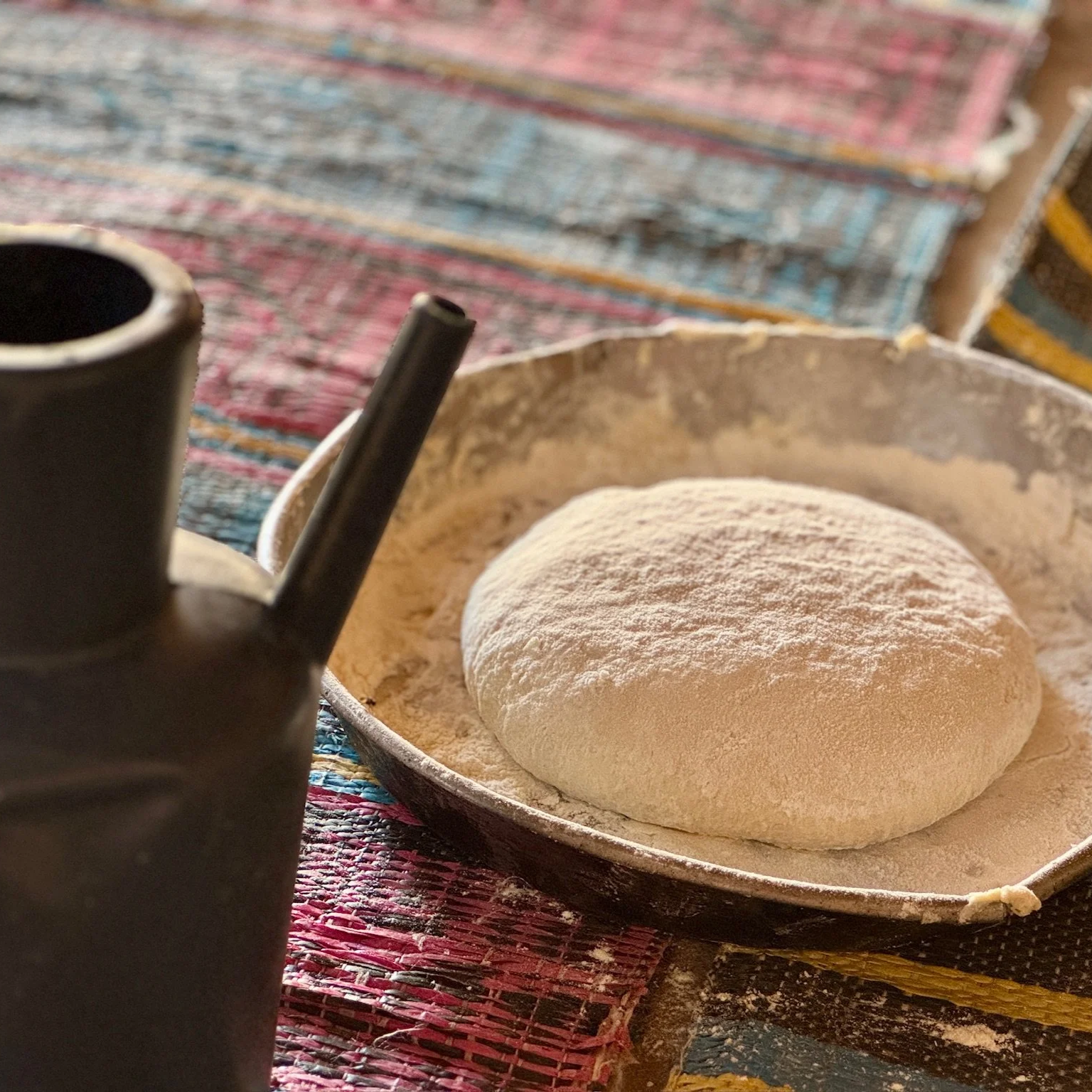
Arboud dough resting until it will be baked outside.
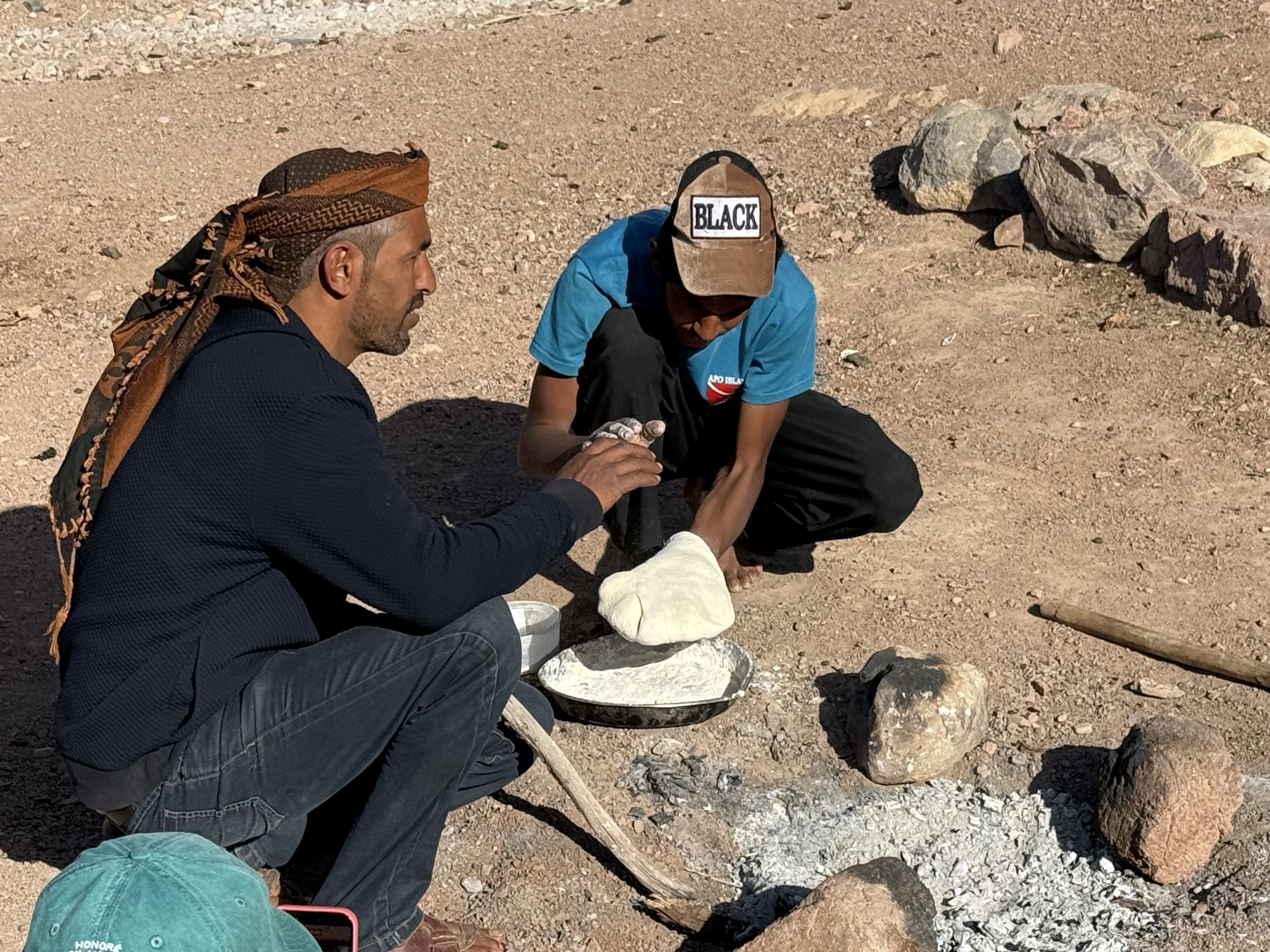
We walked outside where a fire had been prepared and had burned down to ash and embers. Amin our guide (L) with Amin our baker (R).
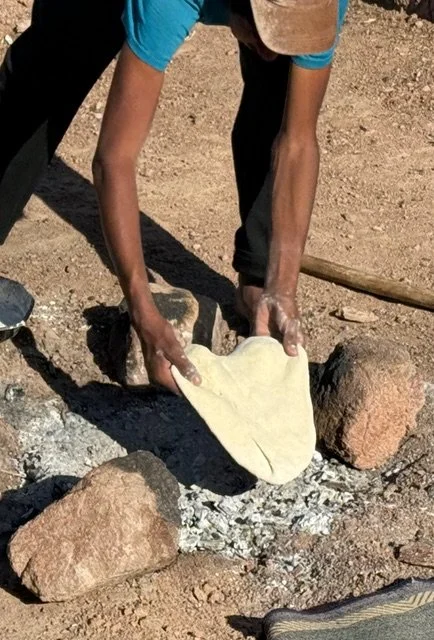
Arboud bread is baked directly in the coals and embers.
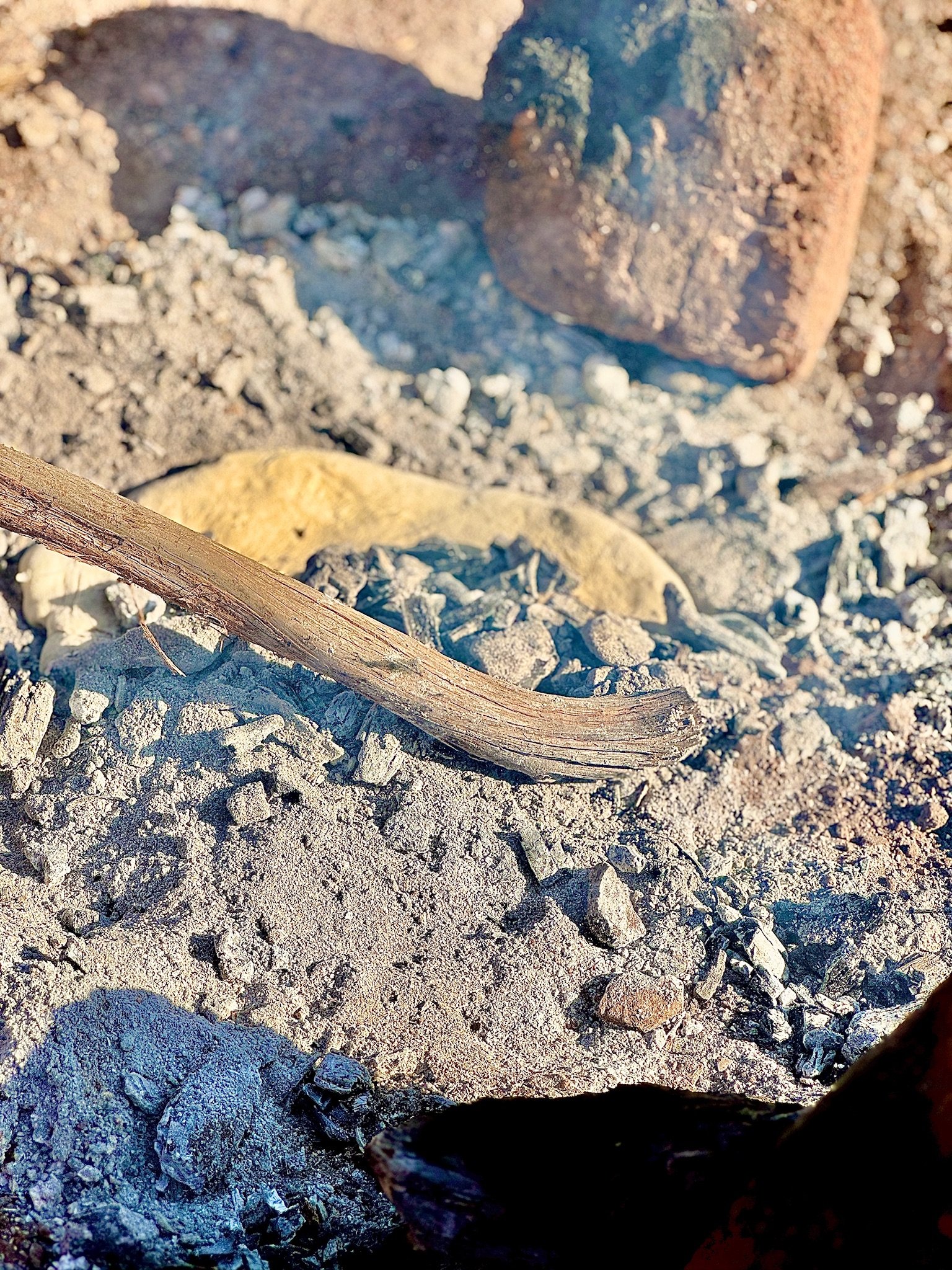
Next the dough is buried in the ash and embers.
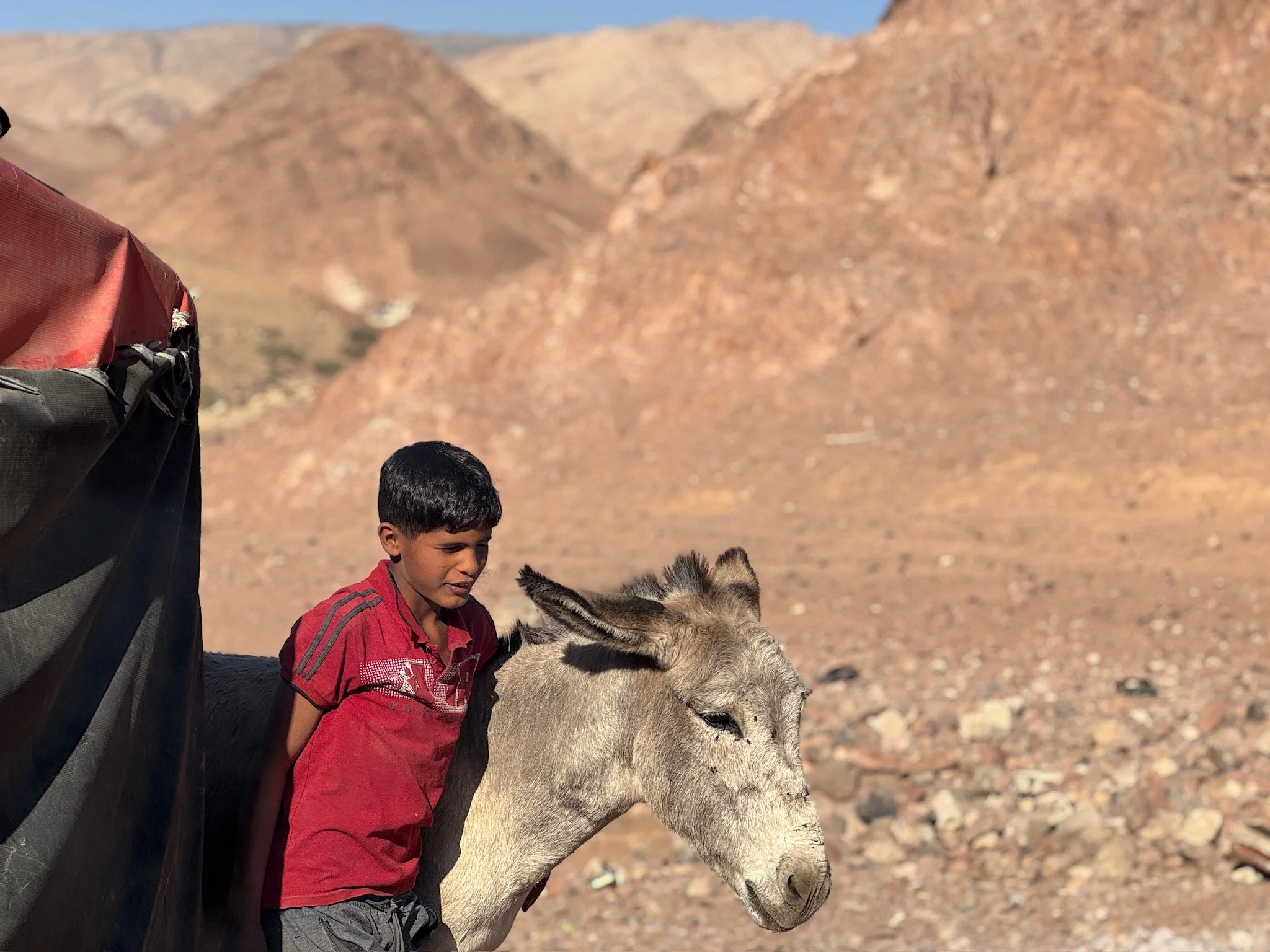
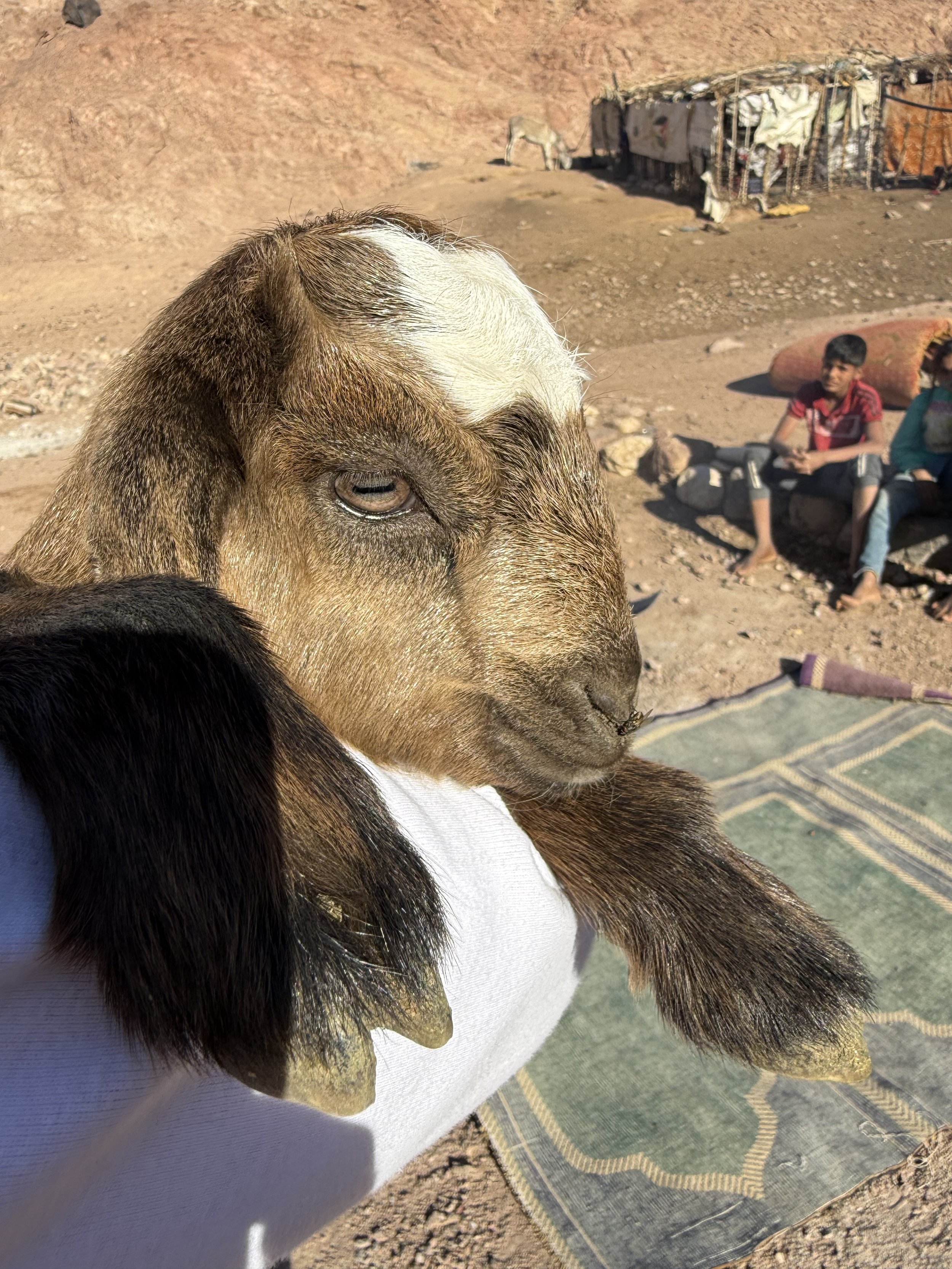
While the bread baked, Abdulah brought out his friends to greet us. First came his donkey.
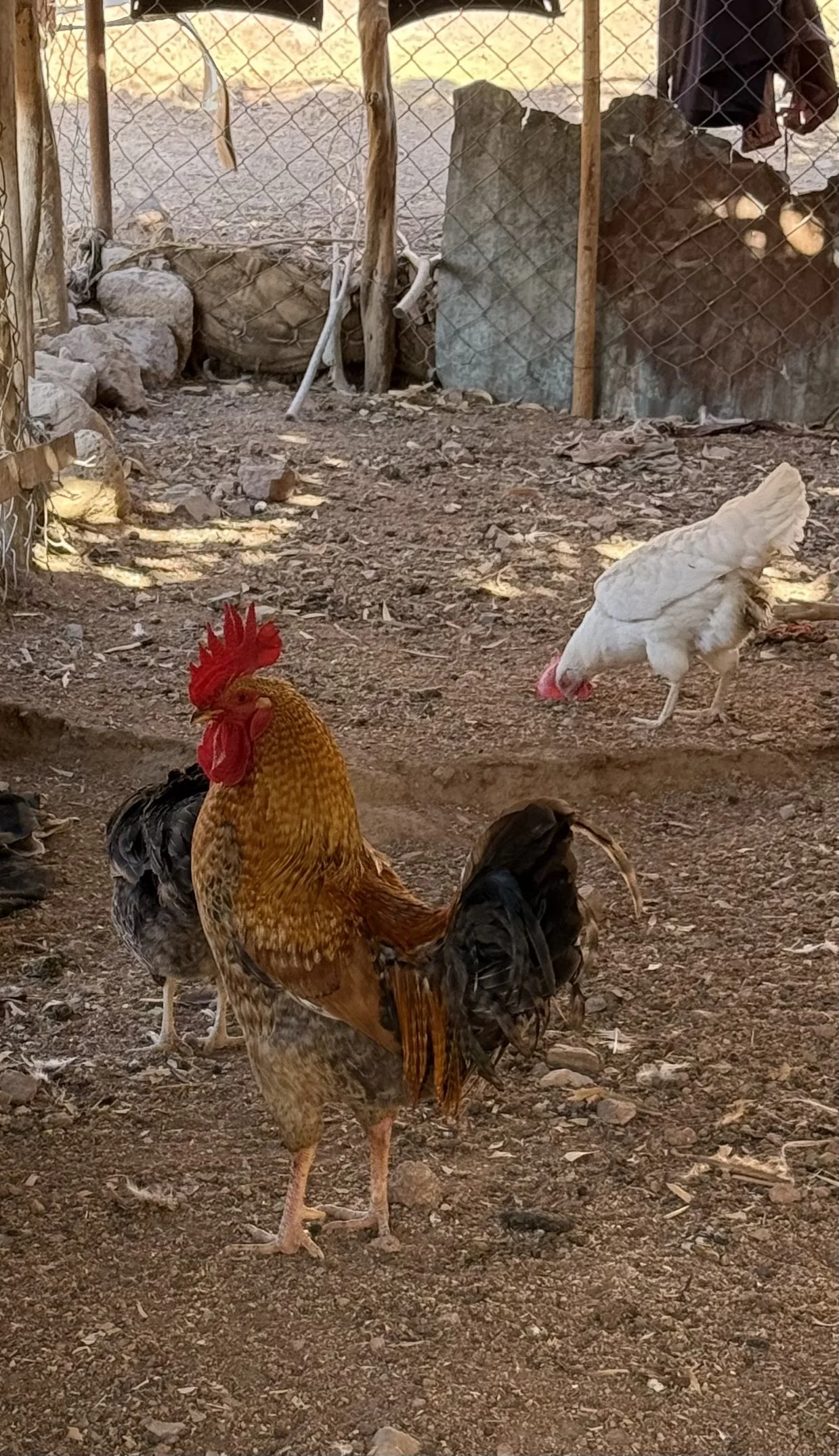
Then the chickens…
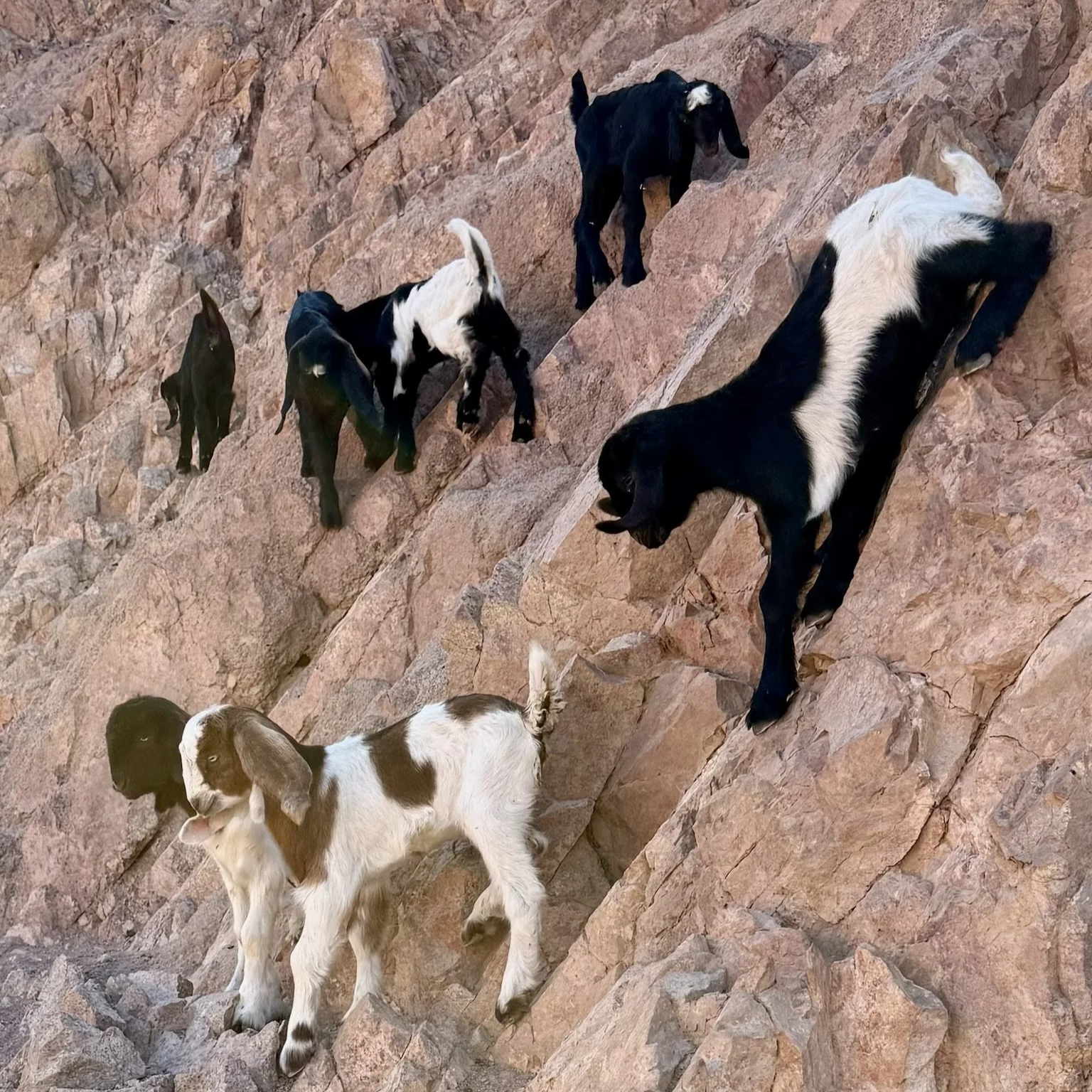
Lastly the baby goats which immediately scampered on the rocky hillside.
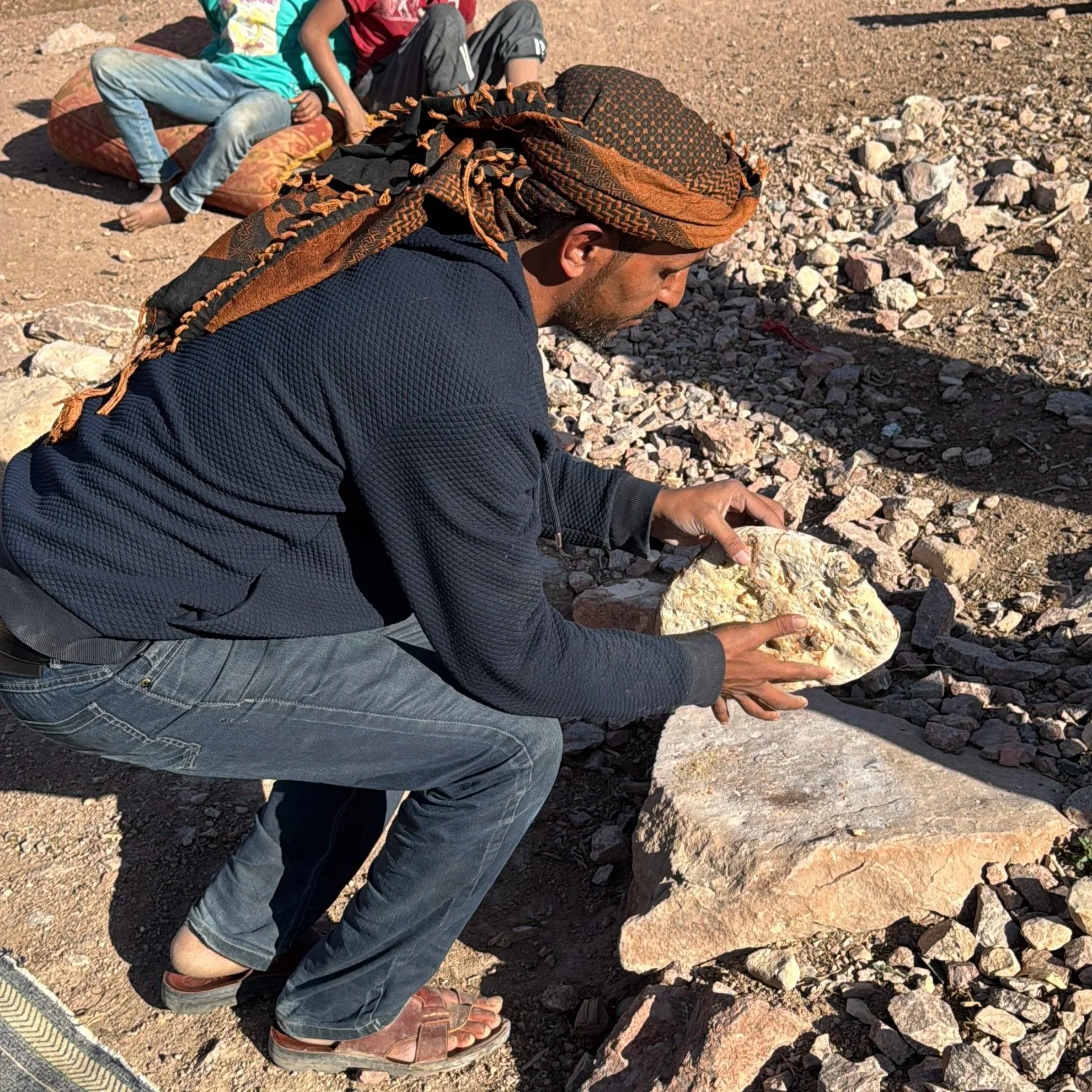
We asked Amin how he knew when the bread was ready. He demonstrated by tapping on the bread with his stick while it was still in the ashes. He told us he could hear the sound and knew the feel of the bread when it was done. This left me wondering how he would remove the ashes. As if reading my mind, he picked up the loaf and slammed it down on a nearby flat rock. He turned it over and did the same thing to the other side of the bread. You can see the ring of flour left on the rock—it’s an incredibly effective method of removing the ash!
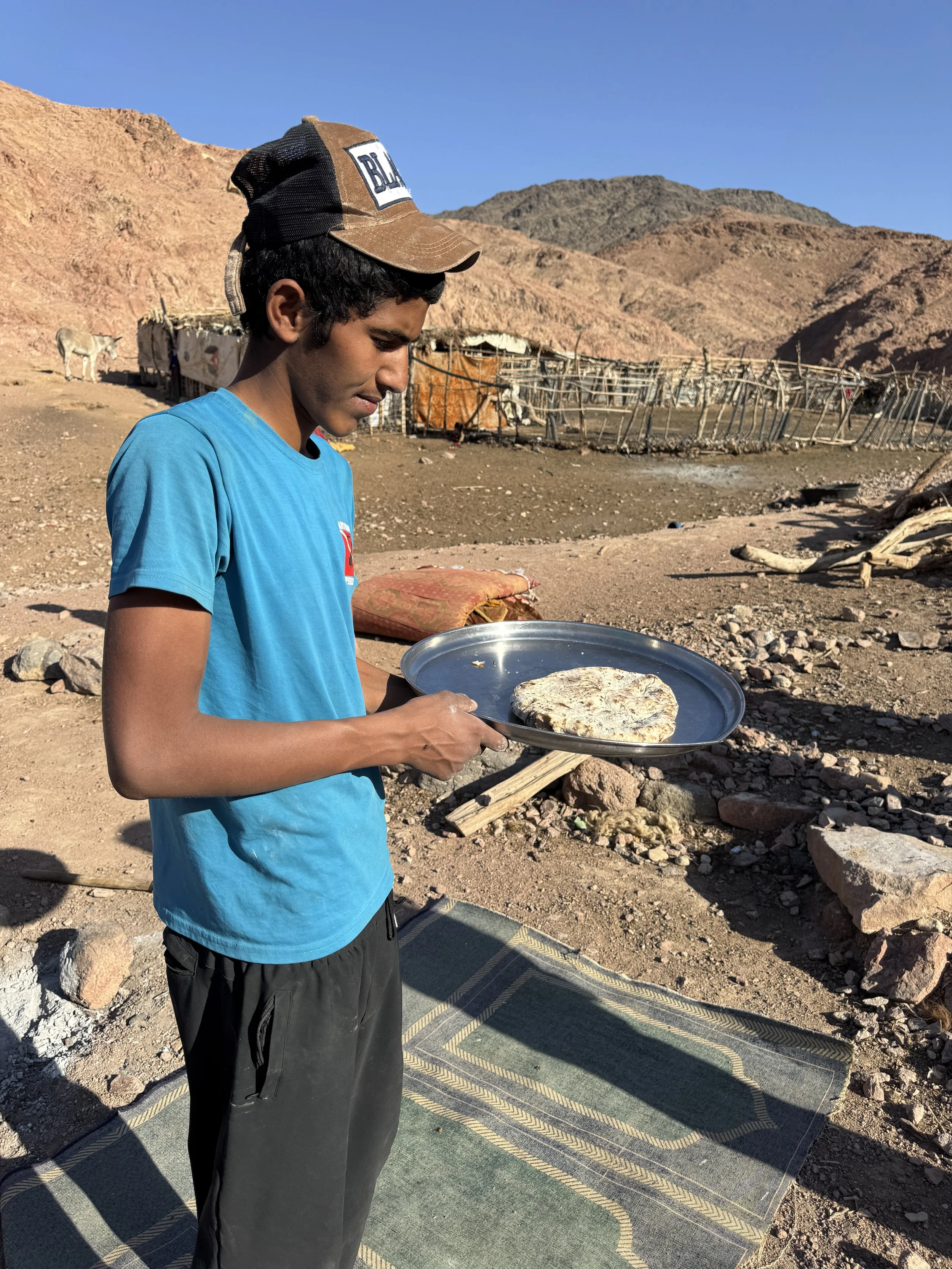
Our baker, Amin, holding his arboud bread fresh and warm from the coals.
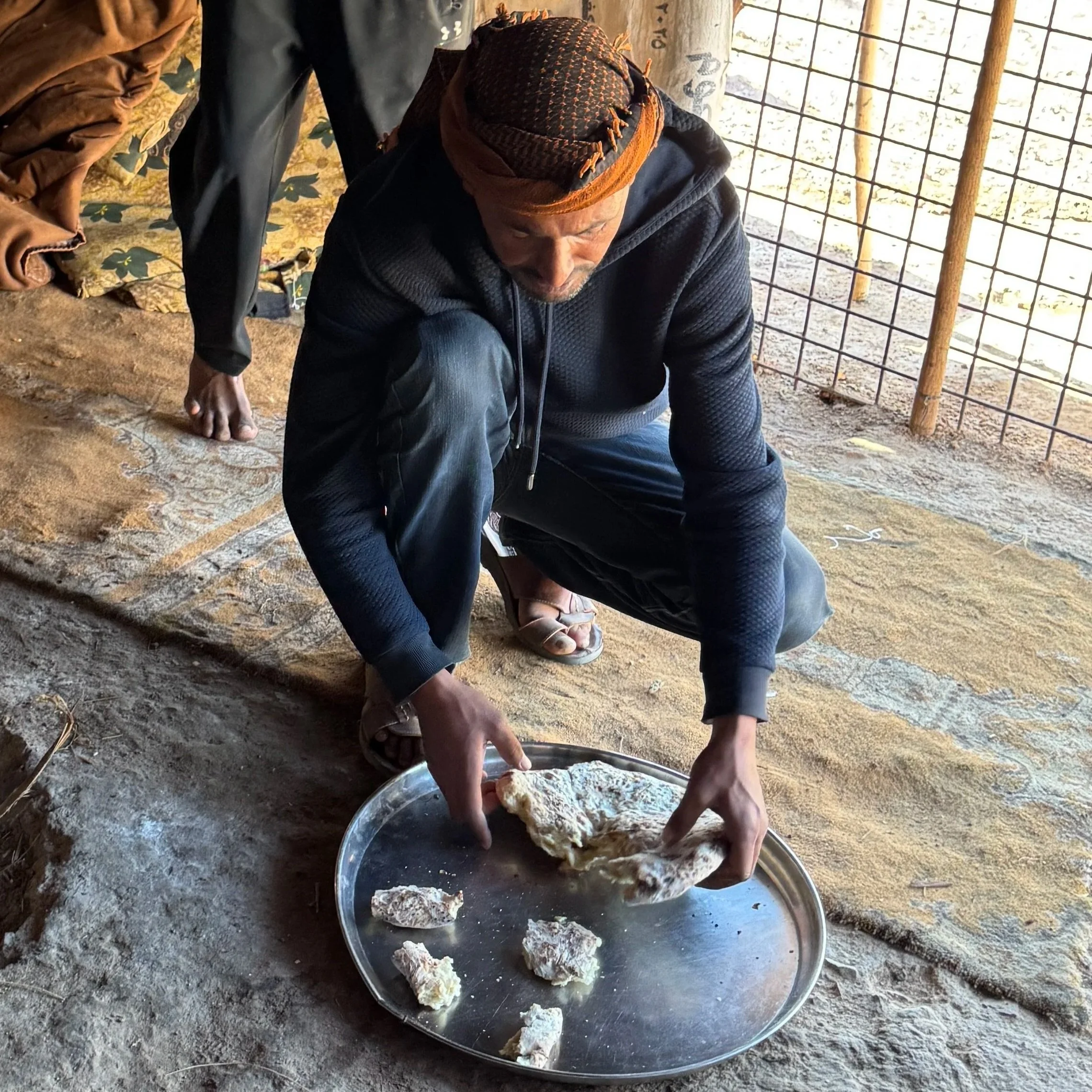
I couldn’t help but make the connection between the arboud bread eaten daily by Bedouin families from a communal plate and the ancient tradition of sharing bread for communion.
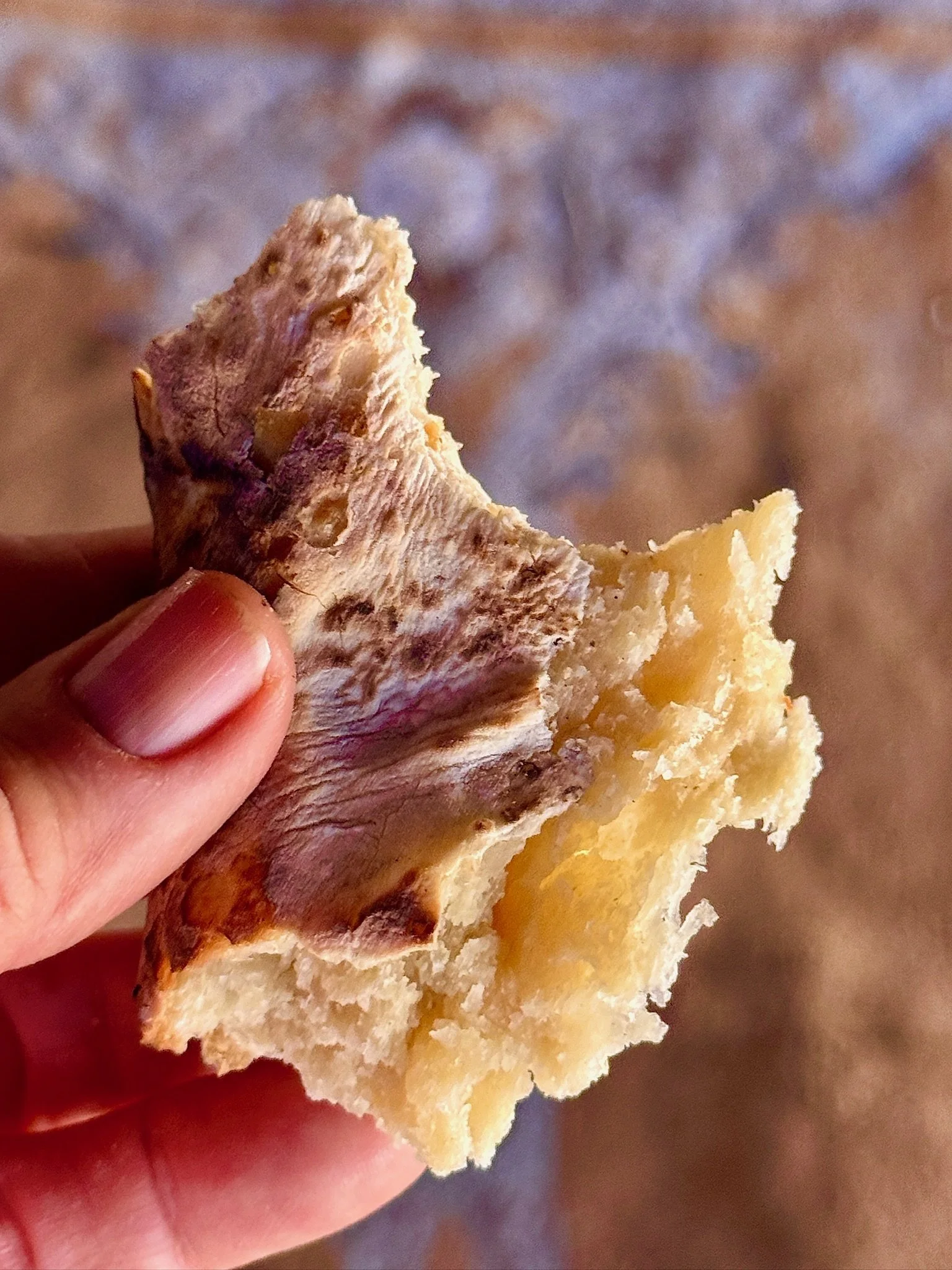
When it emerges, it’s thick and chewy, infused with smoke from the fire.
Sharing the traditional Bedouin bread made from imported white flour from the United States is something I'm still sitting with.