
Follow me to Egypt
February 2026
There are moments in travel when time seems to fold in on itself. I had one of those moments standing inside the National Museum of Egyptian Civilization in Cairo, face to face with a loaf of bread.
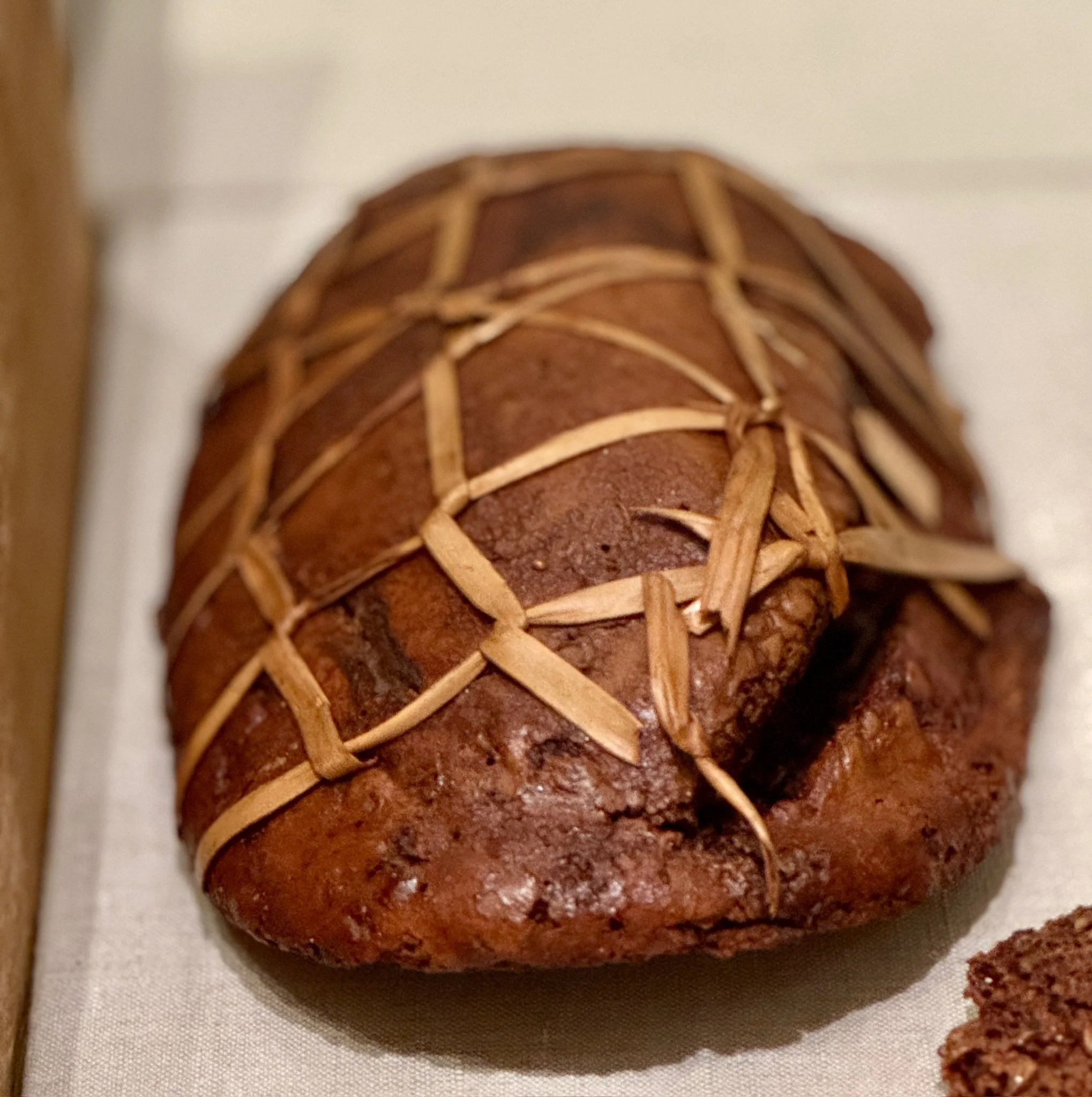
Five thousand years old. Carefully preserved. Beautifully wrapped. And so completely familiar. Flour, water, salt — baked by human hands in a wood-fired oven. I could just imagine the baker standing there, doing exactly what we still do.
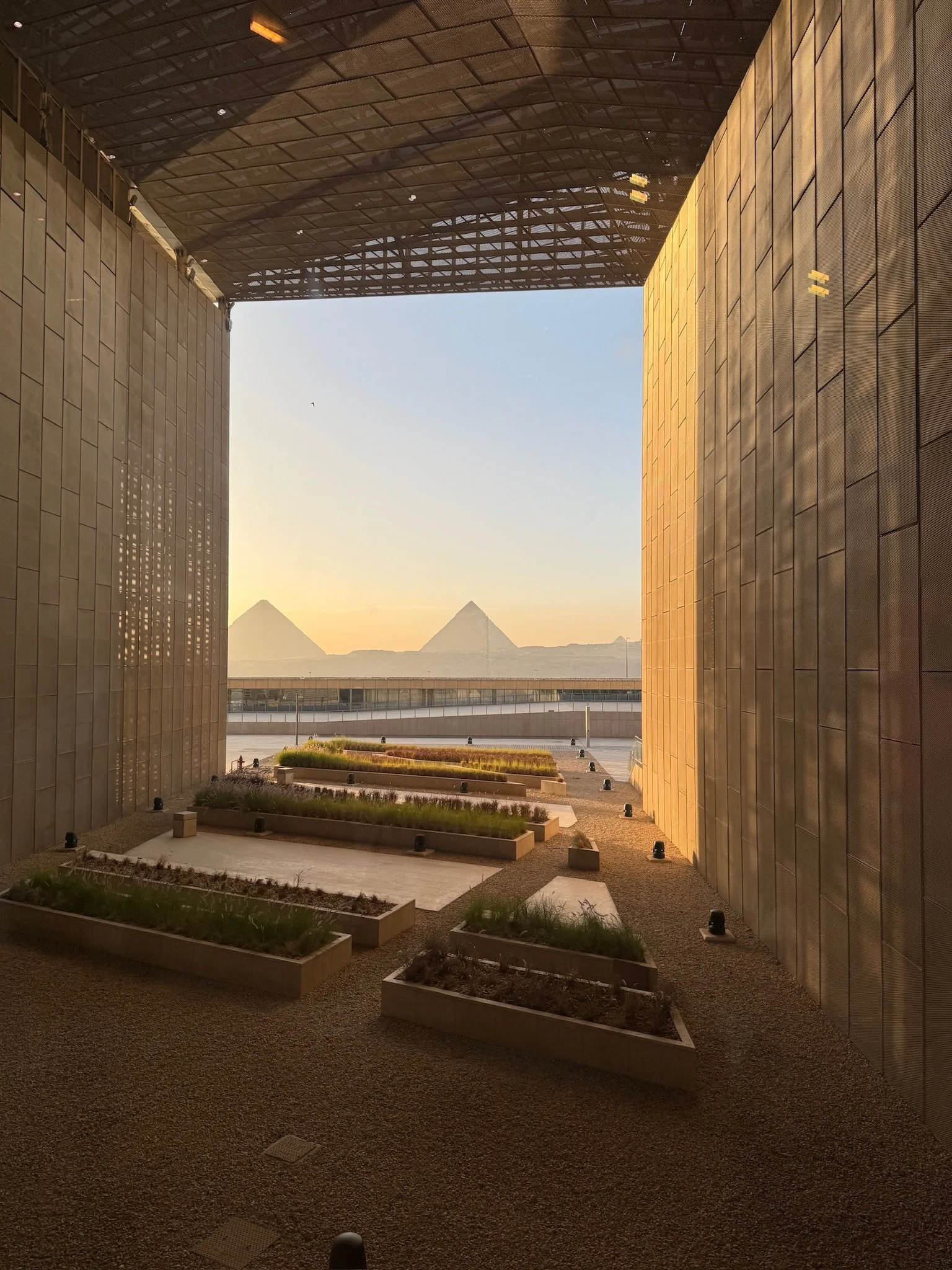
The Grand Egyptian Museum (GEM) has been twenty years in the making. Standing there with the pyramids of Giza rising in the distance I kept thinking: even the grandest civilizations are built on simple things as the small statues below depict.
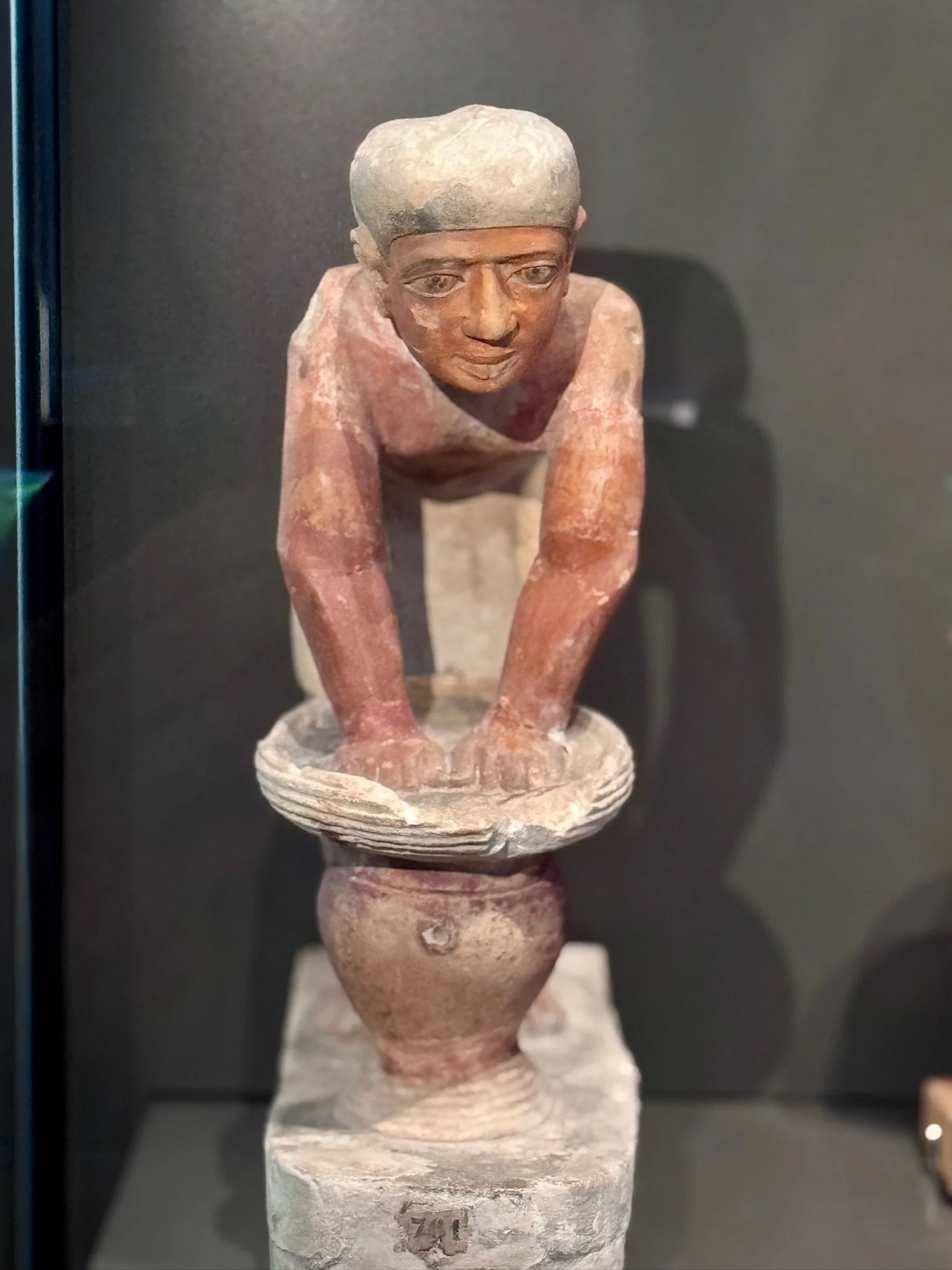
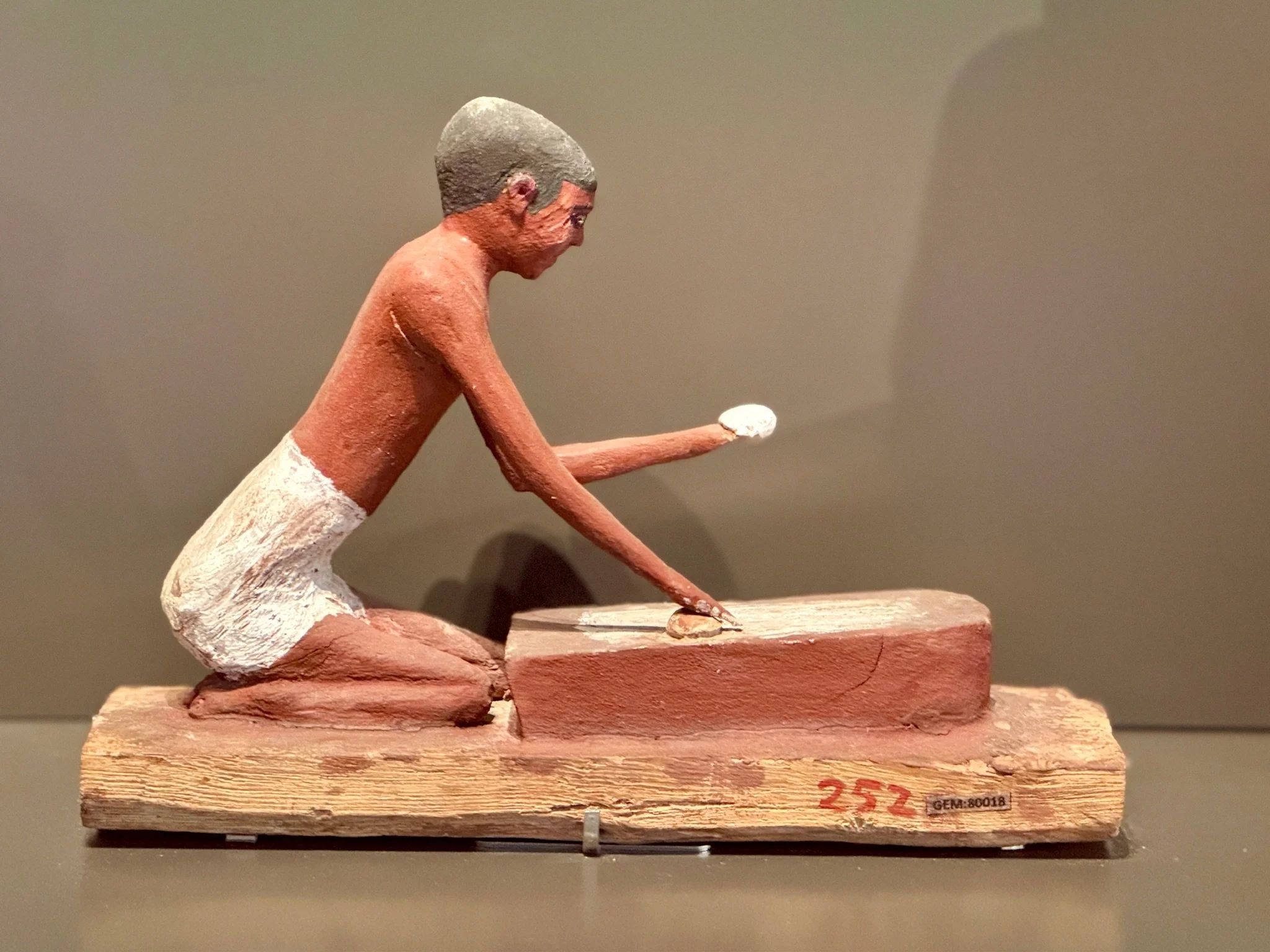
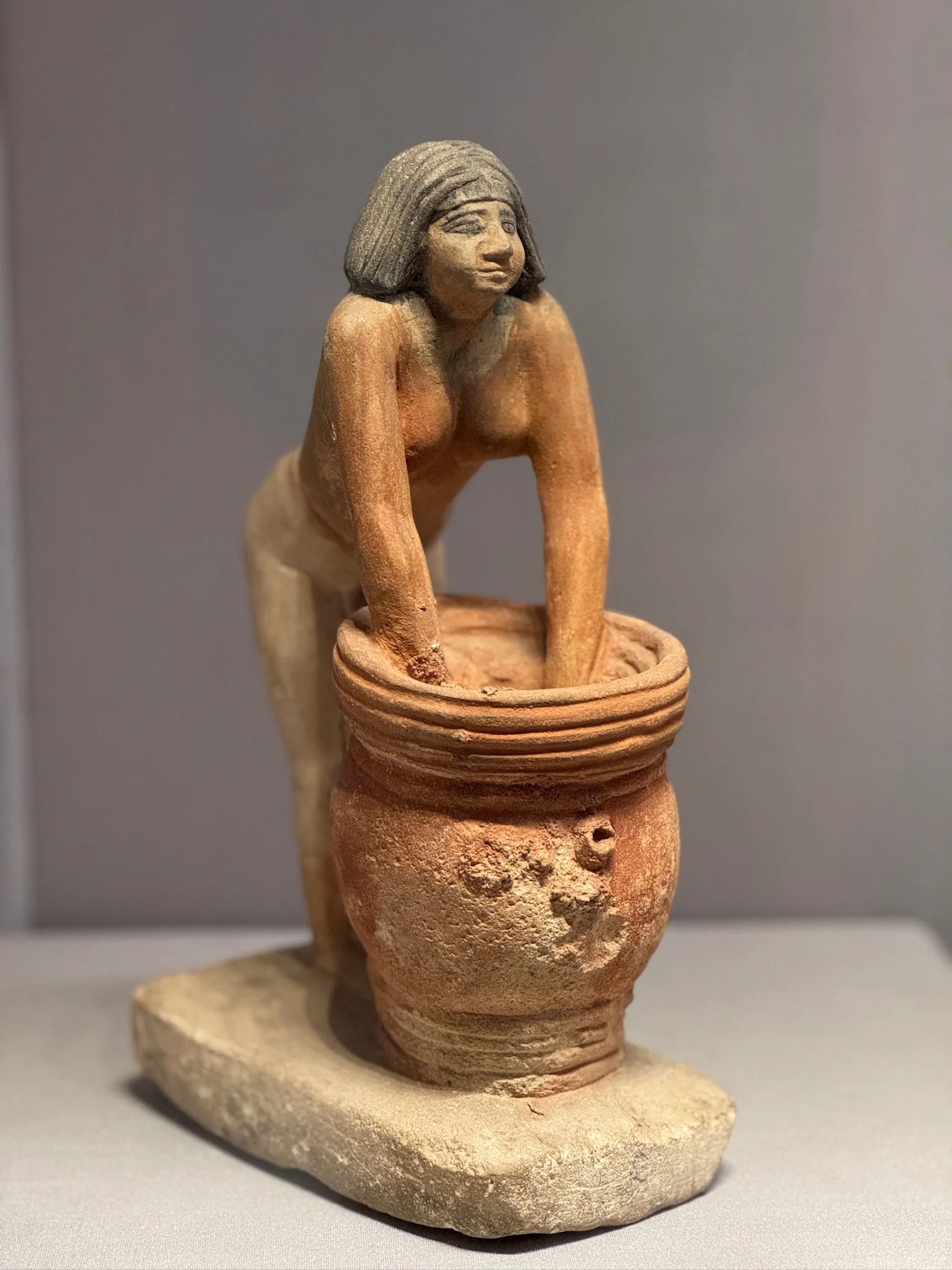
Inside the GEM, small statues quietly tell the story of how a civilization was nourished: millers bent over their work, bakers shaping loaves, brewers tending their jars.
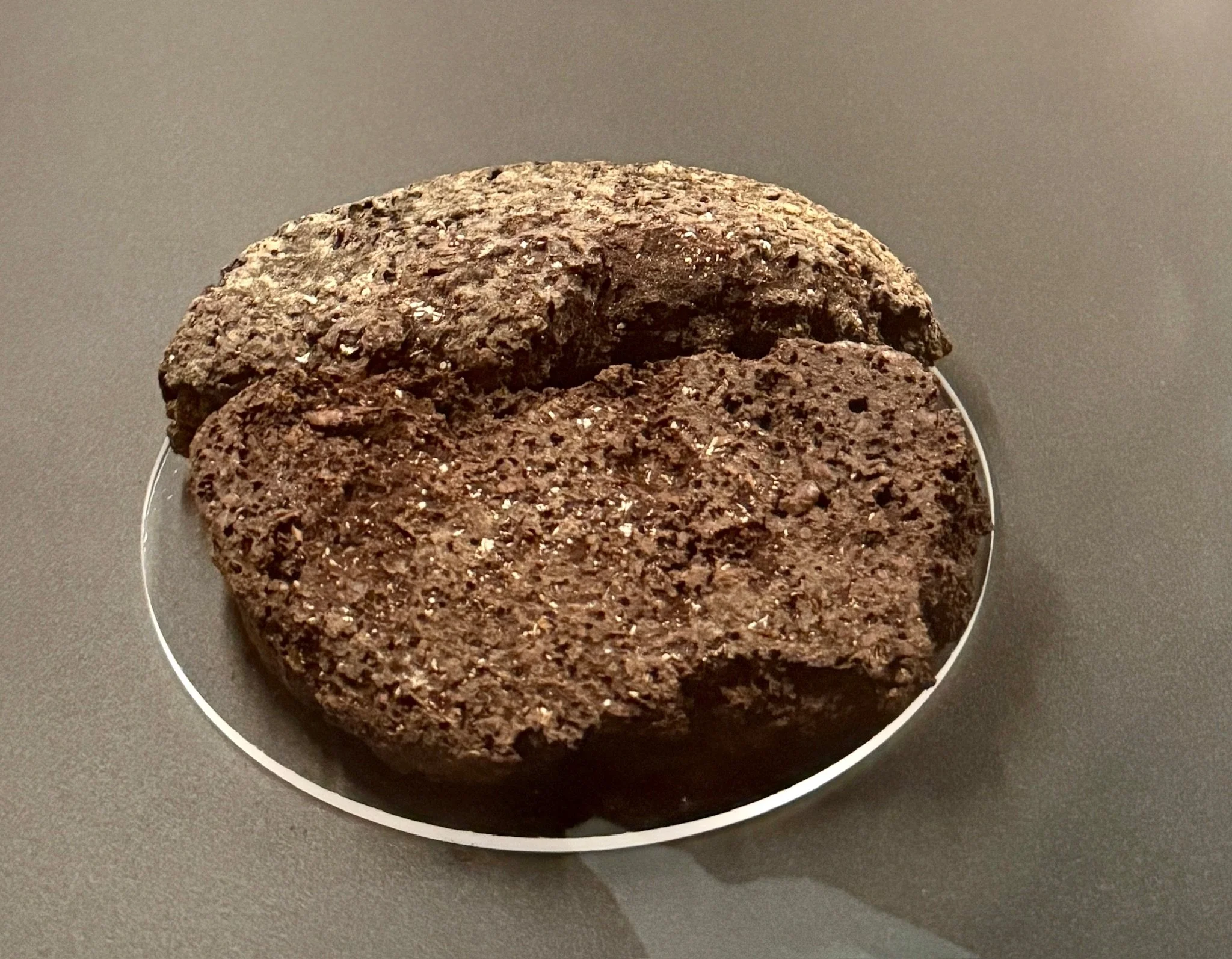
One ancient loaf, described by Howard Carter, the British archeologist who discovered King Tut’s tomb, as resembling a 'petrified sponge,' still holds the imprint of a baker's hand. You can almost picture the moment.
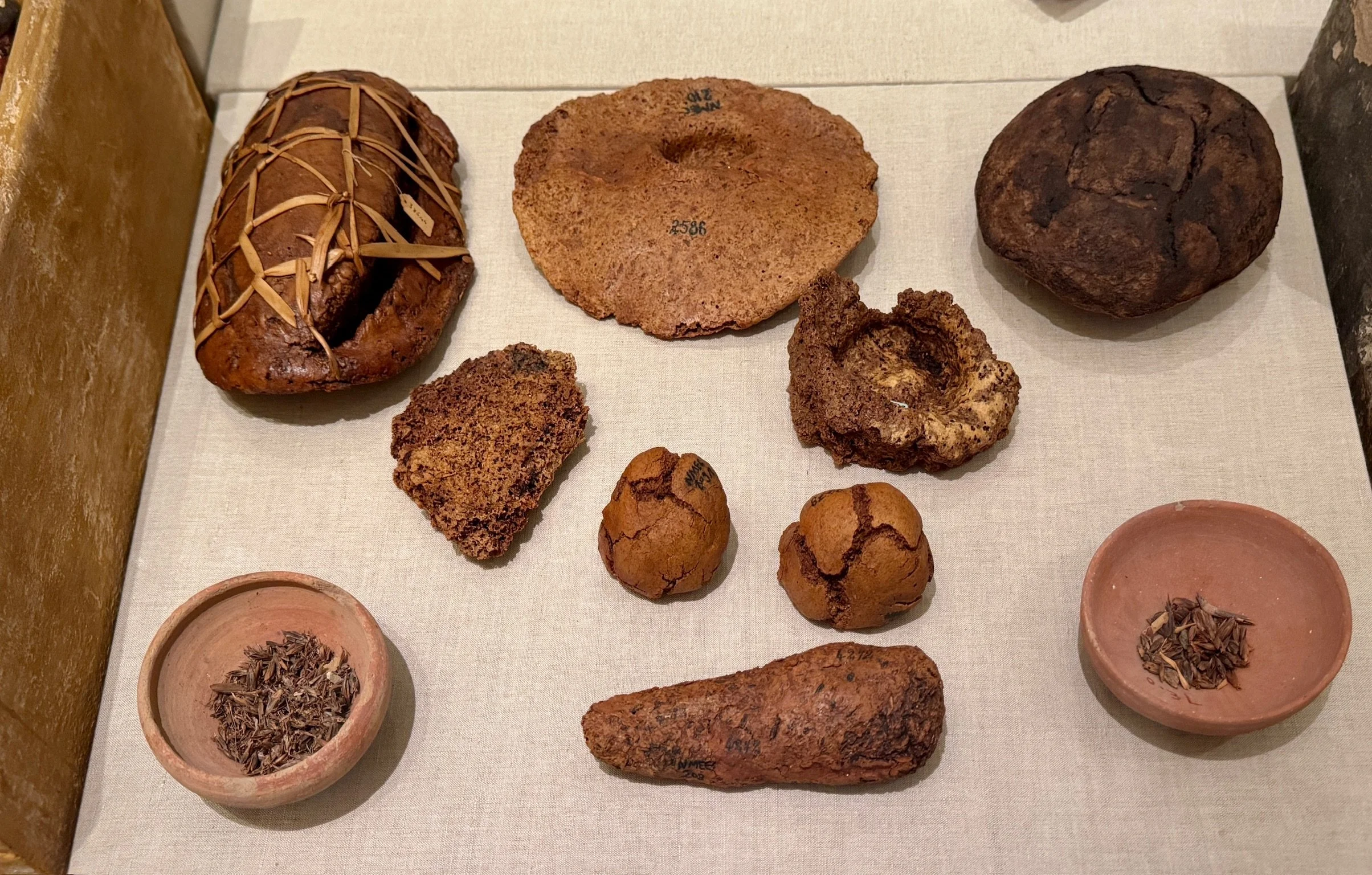
Bread in ancient Egypt was often made from emmer wheat, sometimes barley. It was the foundation of daily life—and of spiritual life too.
Archaeologists have uncovered loaves in tombs at Deir el-Medina, placed there to nourish the dead for eternity. Some were shaped into rounds or spirals, others into animals and birds. More than 40 varieties, flavored with cumin, coriander, garlic, and honey––early ancestors of what Egyptians called ka’k, the root of our word “cake.” Even then, bread was both sustenance and expression.
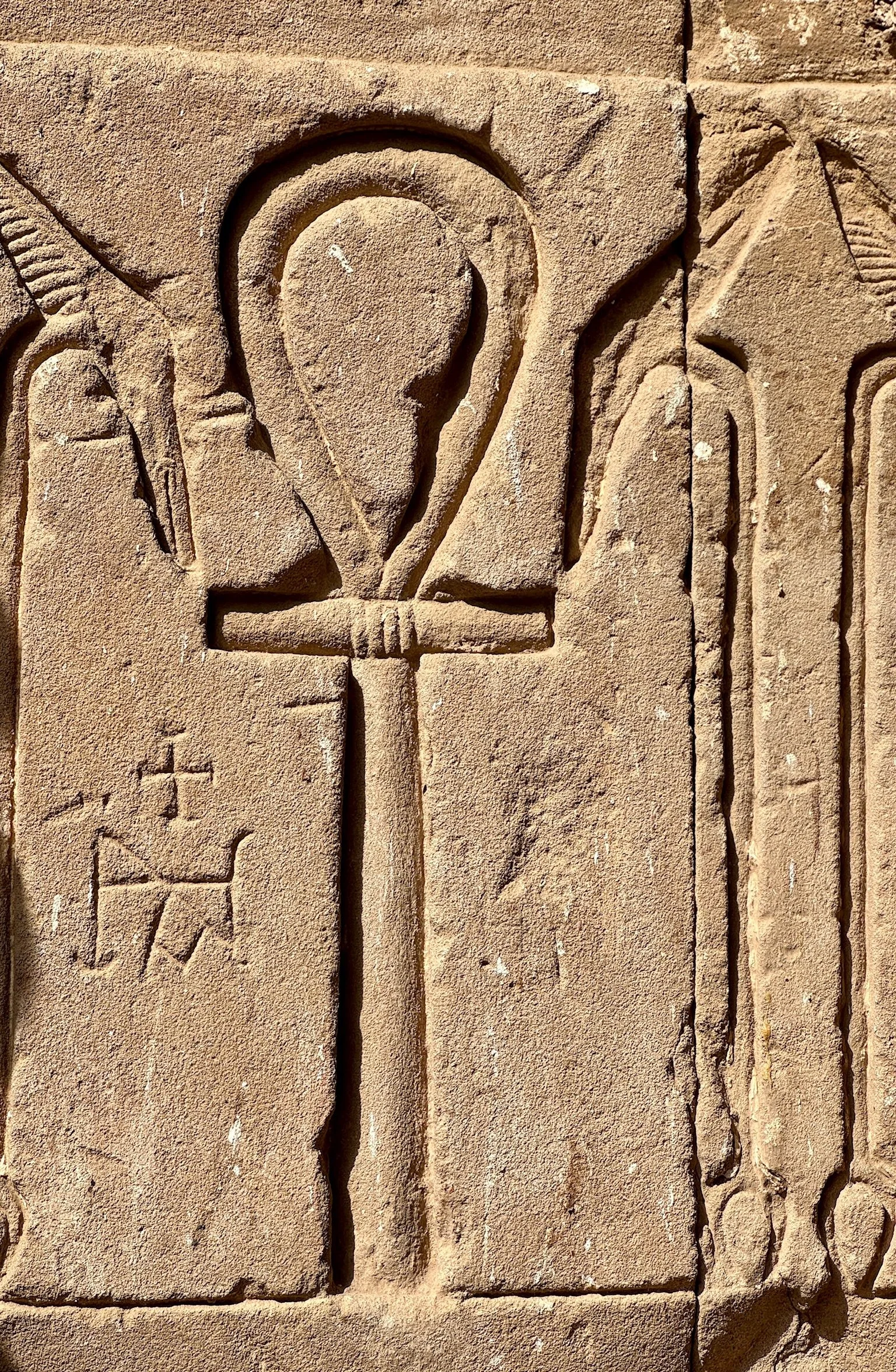
Everywhere we went, the ankh appeared — the ancient Egyptian symbol for life — in the same spaces as wheat and bread.
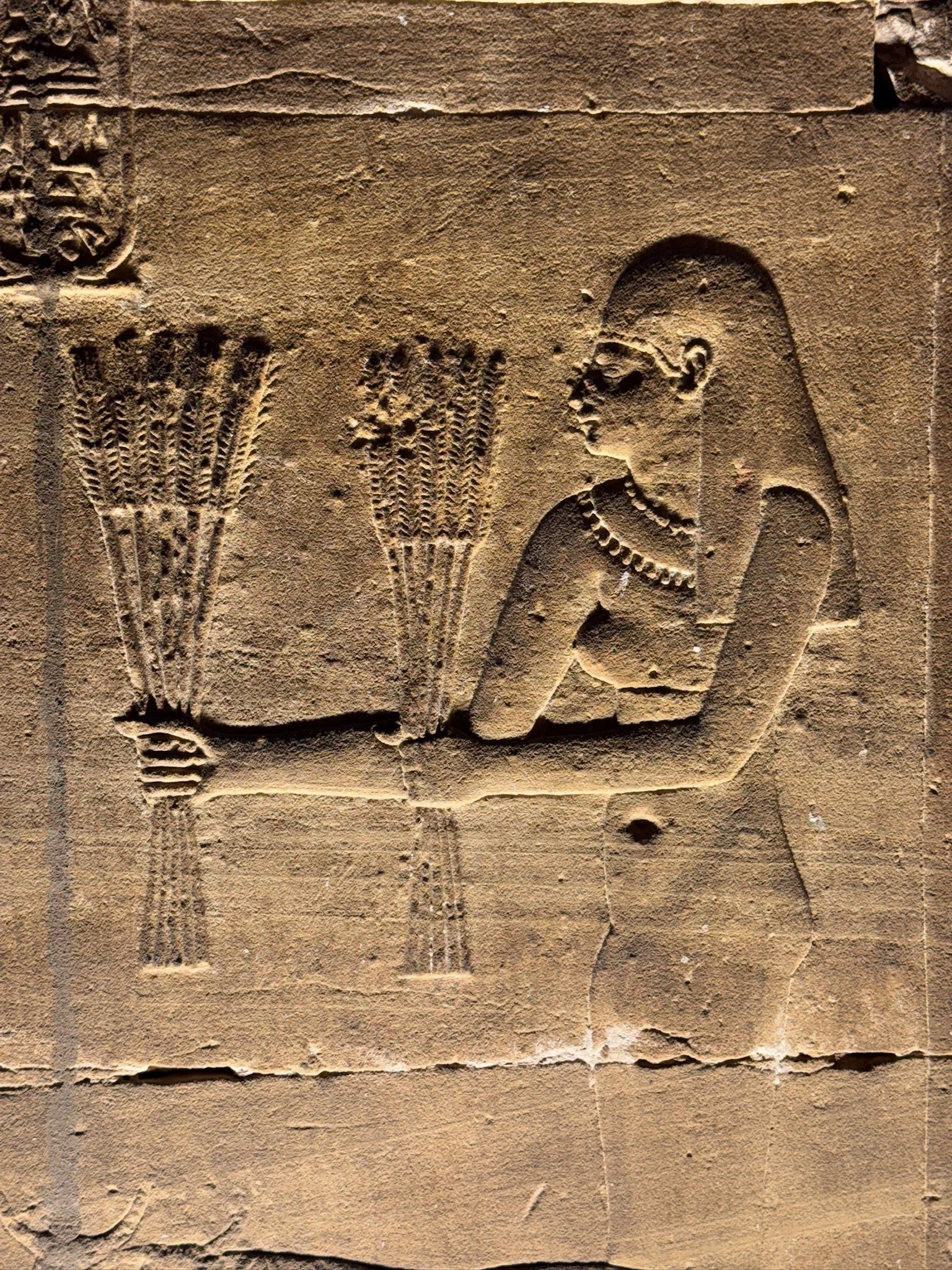
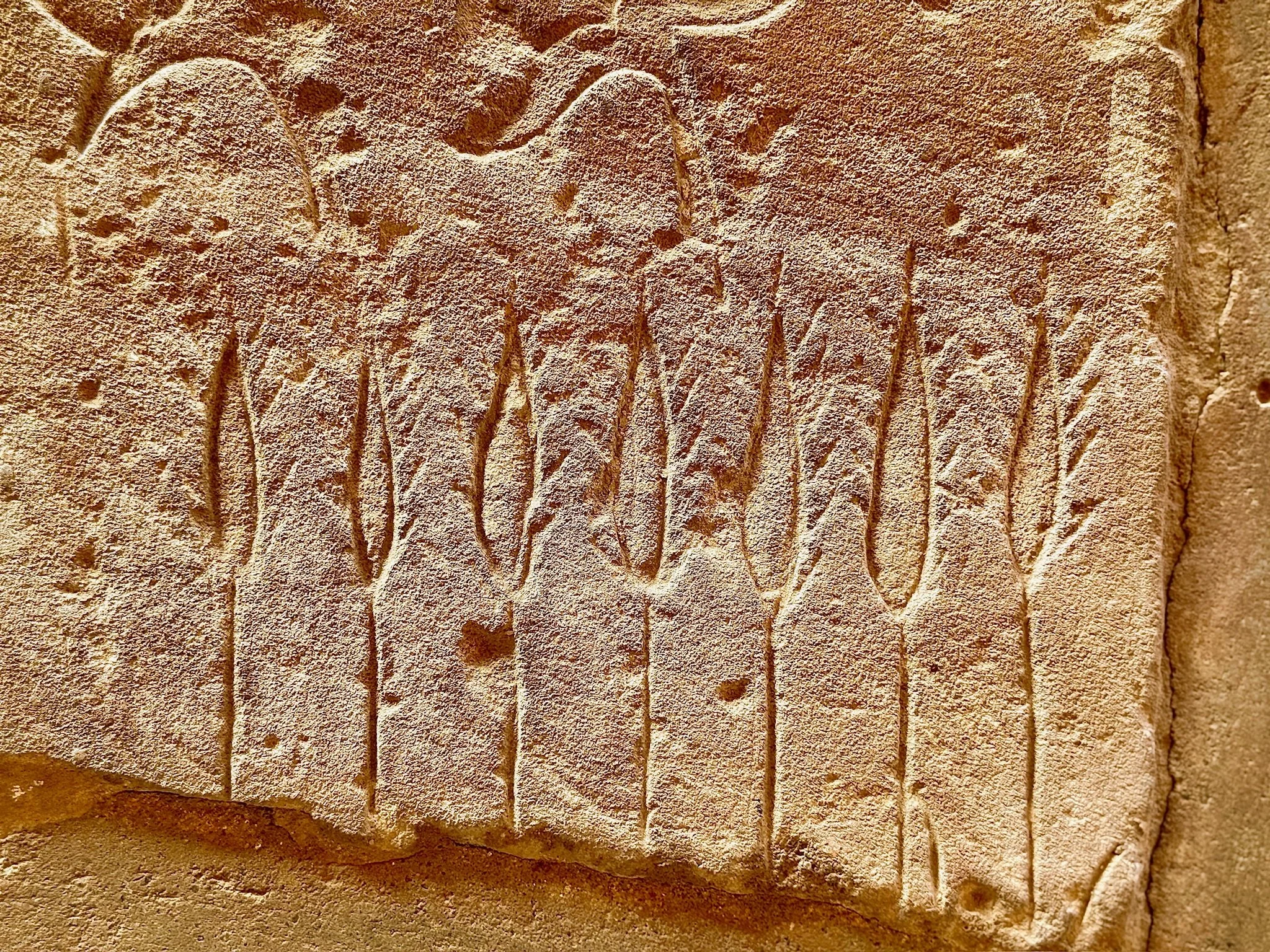
At the Temple of Edfu, a 2,000-year-old bas relief carving shows a woman with her hands extended, offering wheat. Her posture is reverent. No translation needed. Wheat as a gift. Wheat as something sacred.
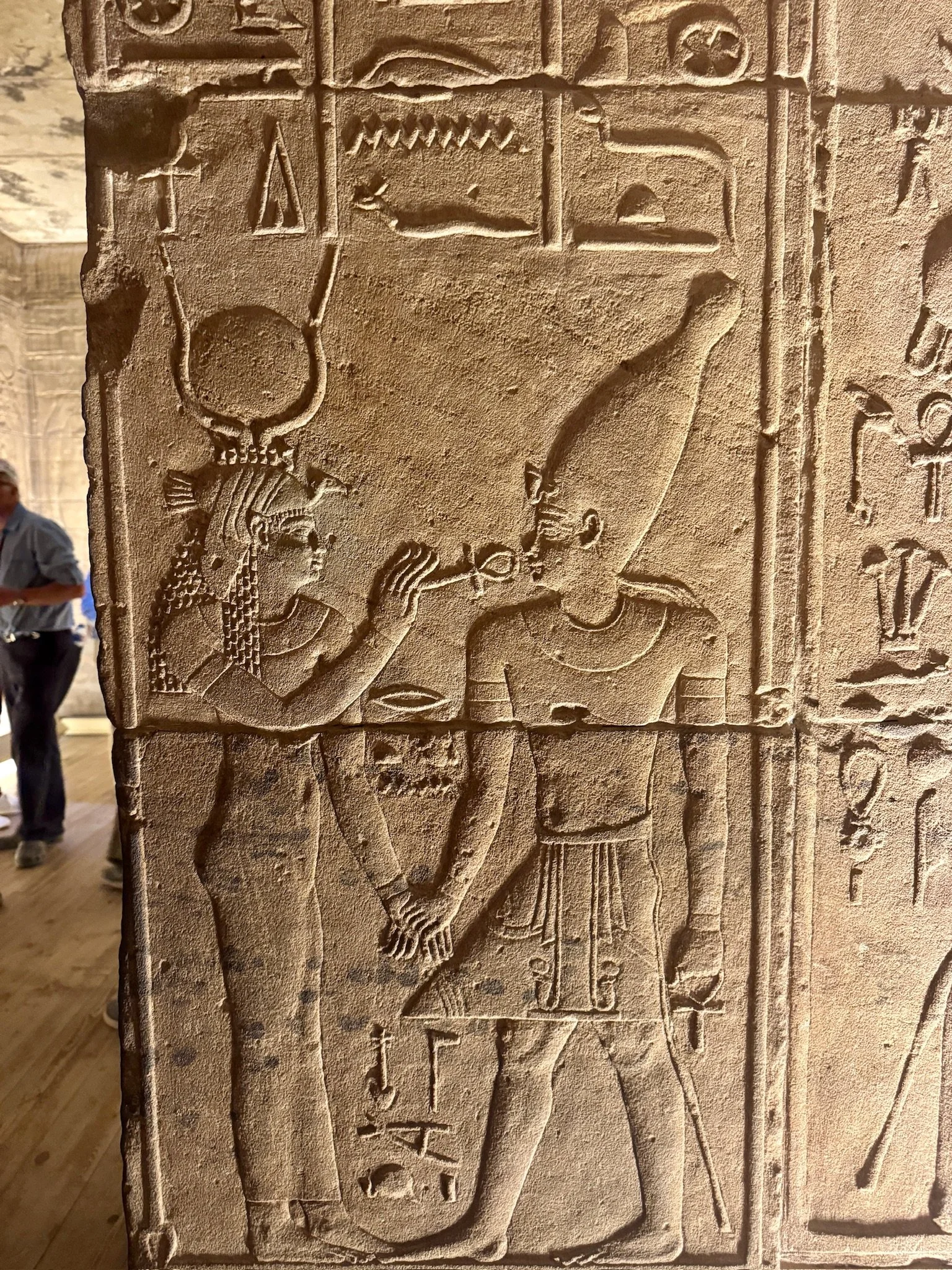
At Philae, there's a bas relief carving of the goddess Isis placing the ankh into the mouth of the pharaoh Ramesses II––life itself is being given. And then there's this: in Egyptian Arabic, the word for bread and the word for life are the same. Aish. One word, holding both things at once. That doesn’t feel like a coincidence. It feels like the Egyptians understand something we may have forgotten.
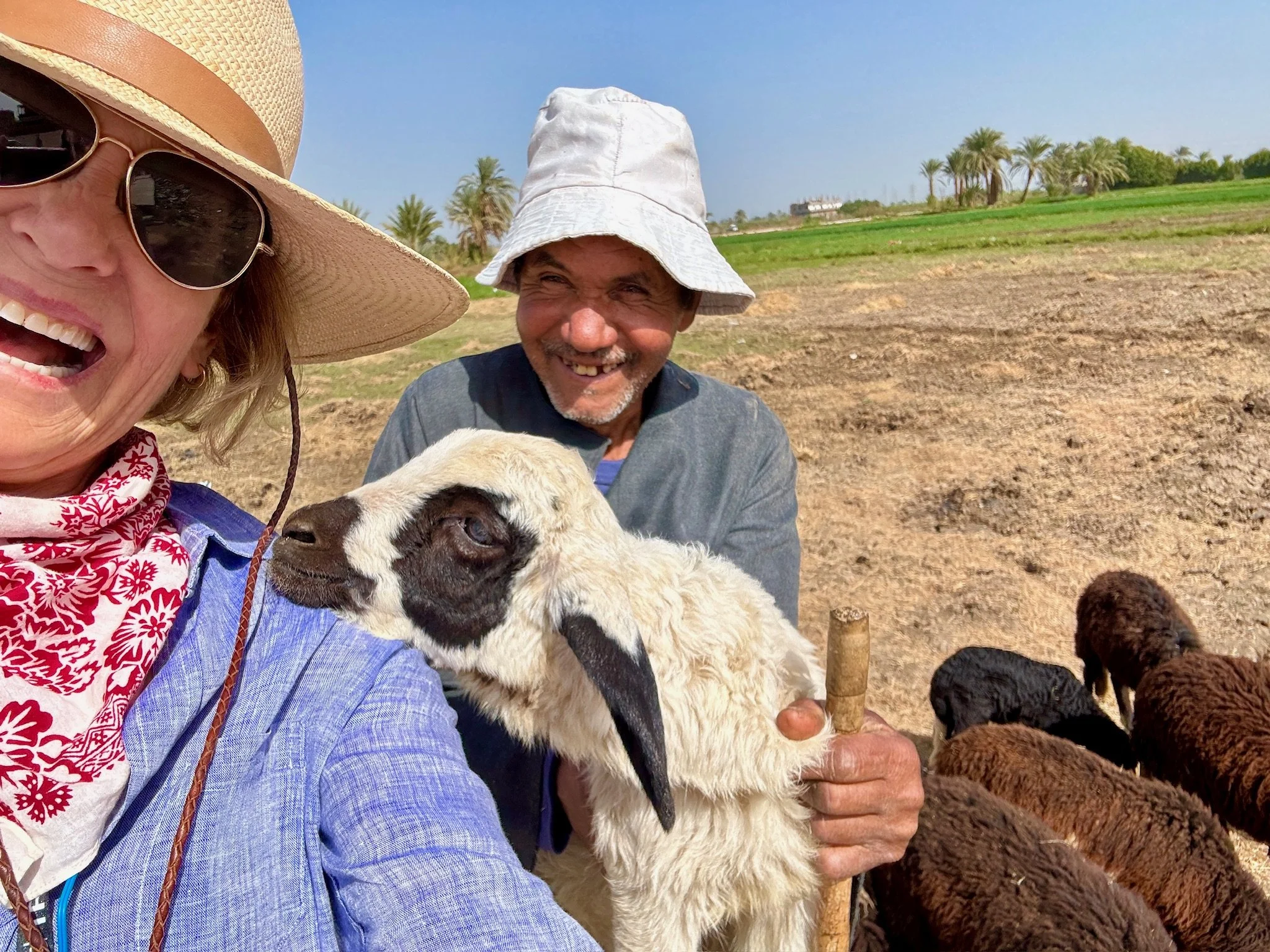
Not far from the Nile, outside of Luxor, I came across a lovely shepherd tending his lambs. It was a simple moment, but it felt like a bridge across time.
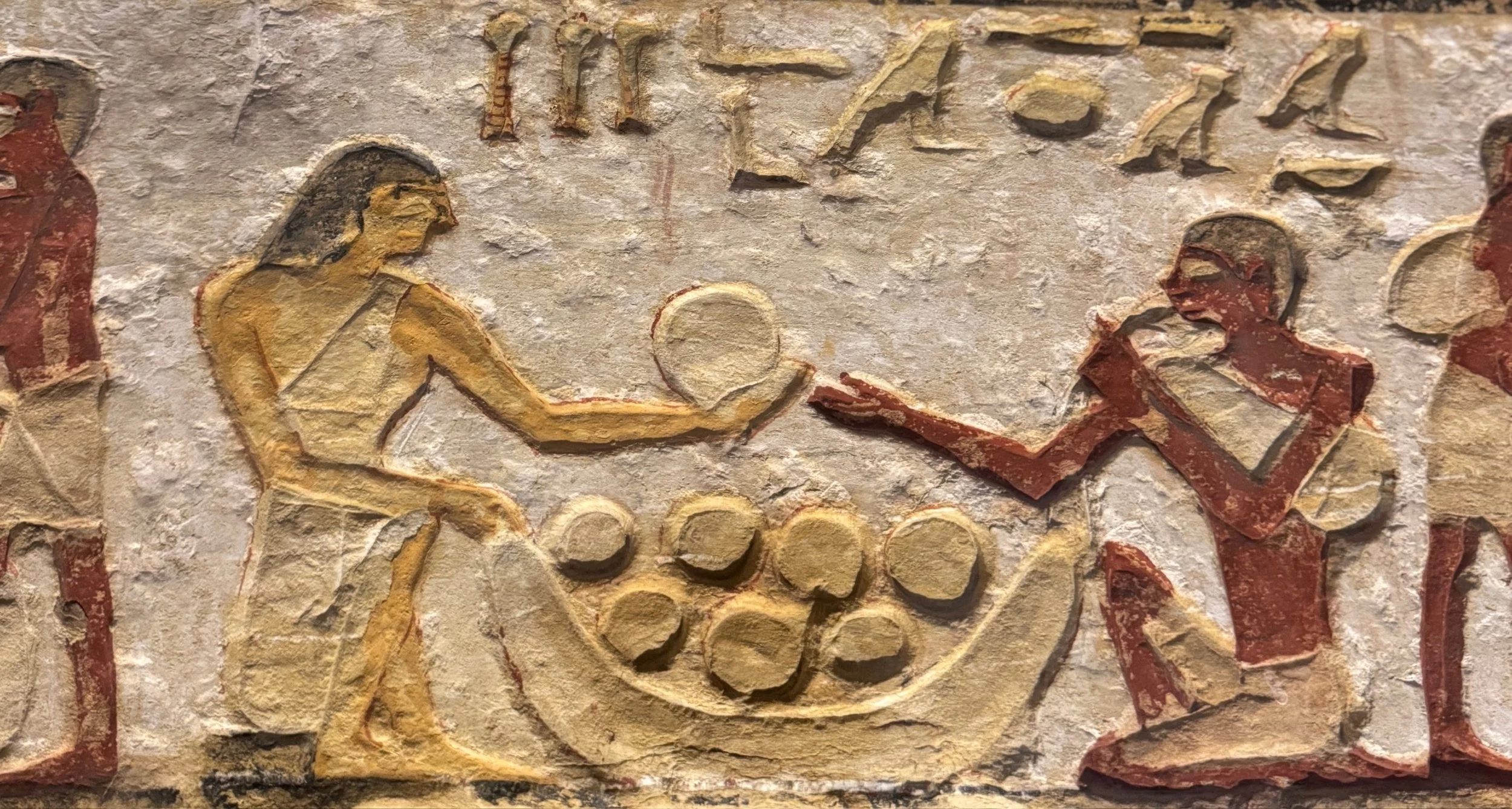
Along the Nile Valley, life followed the rhythm of planting and harvest. Calendars, feasts, economies, entire social structures were shaped by the growing of food. Evidence of agriculture stretches back to 8000 BCE, with large-scale cultivation emerging around 6000 BCE.
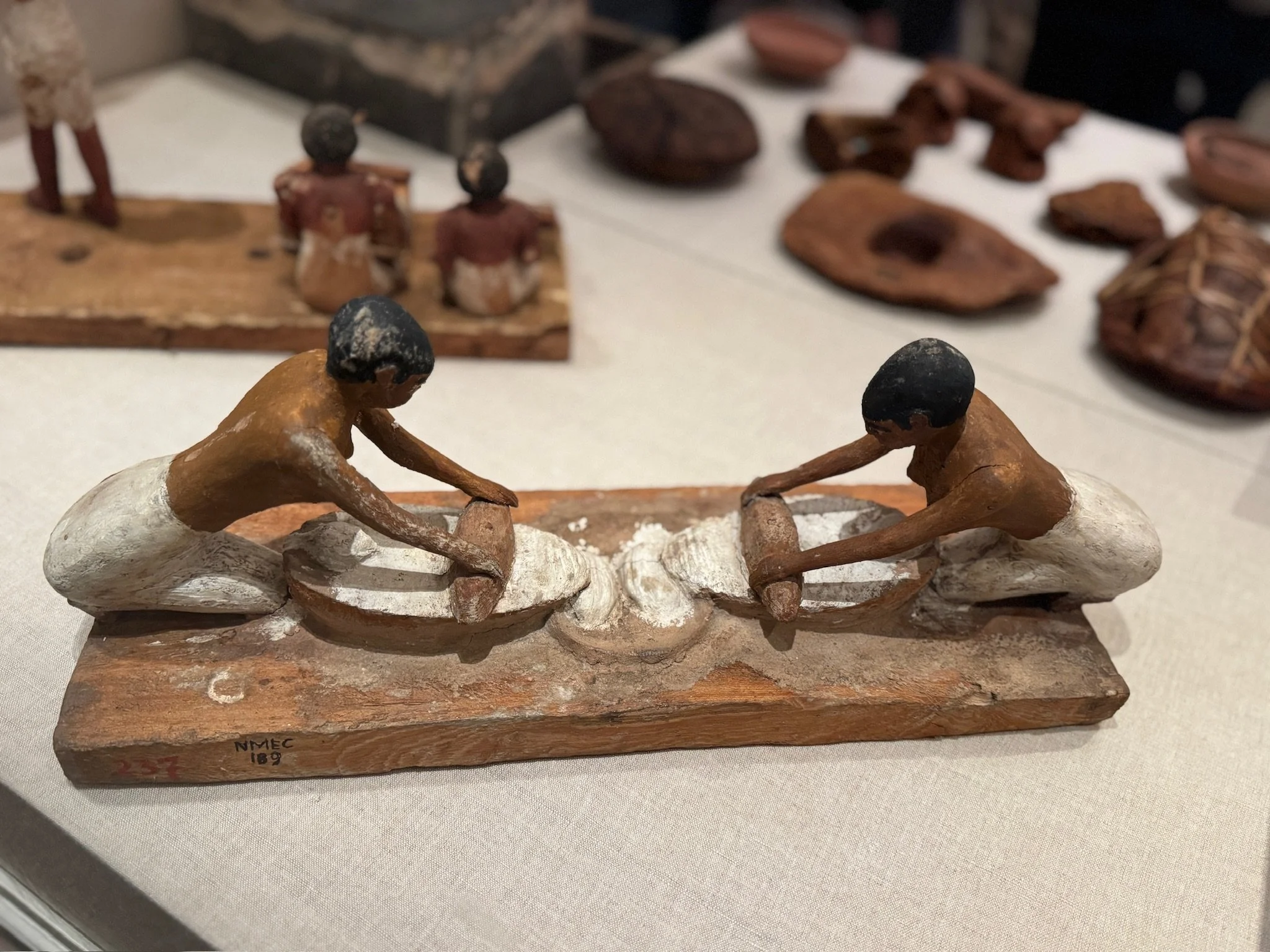
Women ground grain by hand, kneeling over mill stones. Dough was mixed simply—flour, water, salt—rarely yeast. Loaves were baked directly on fire or in clay molds inside ovens.
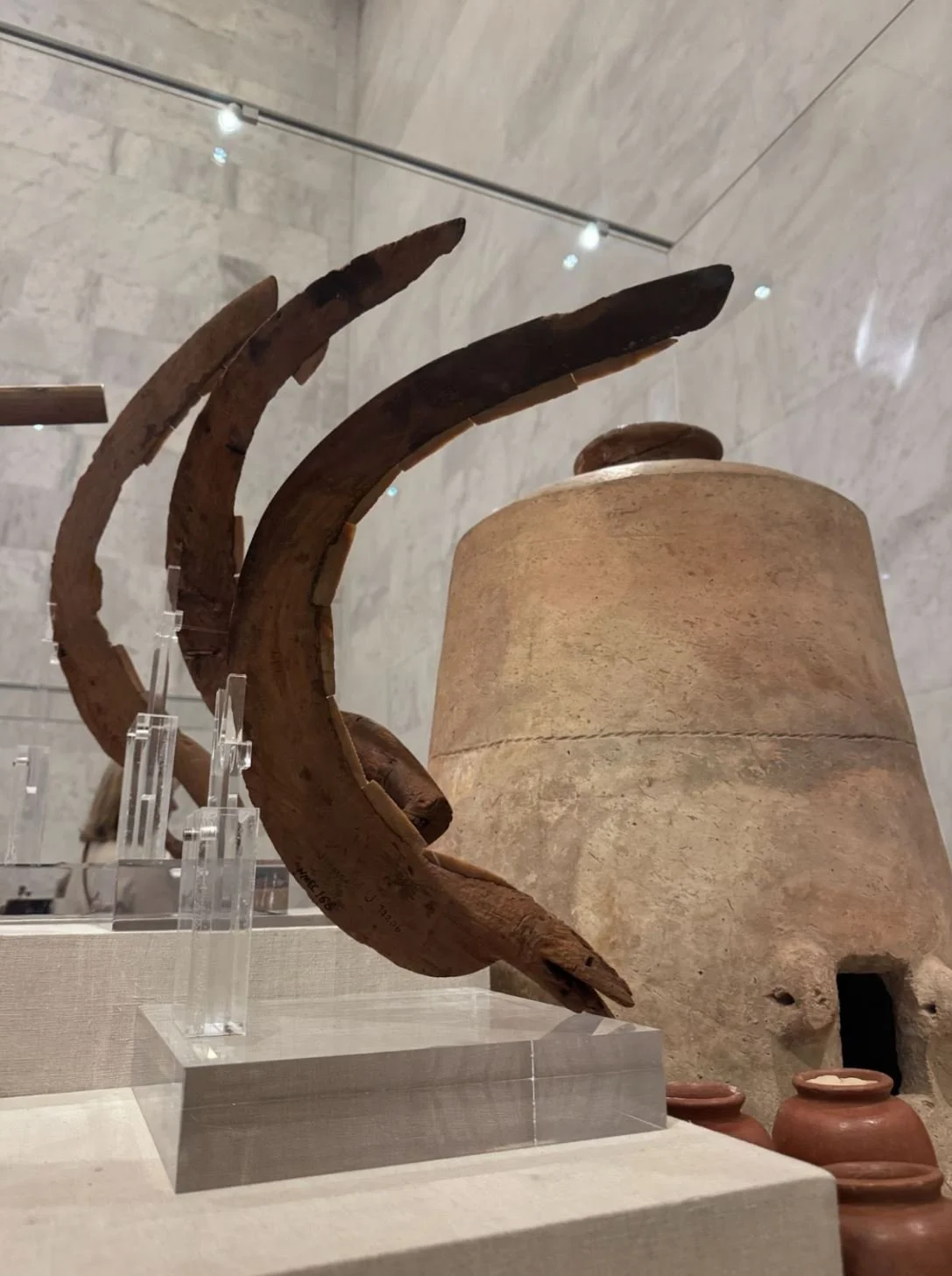
A 5,000 year old sickle used to harvest wheat––like the sickles we use in the fields at Honoré’s harvest day. This sickle had a carved wooden handle with carefully-shaped saw-tooth metal blades glued using resin or sap.
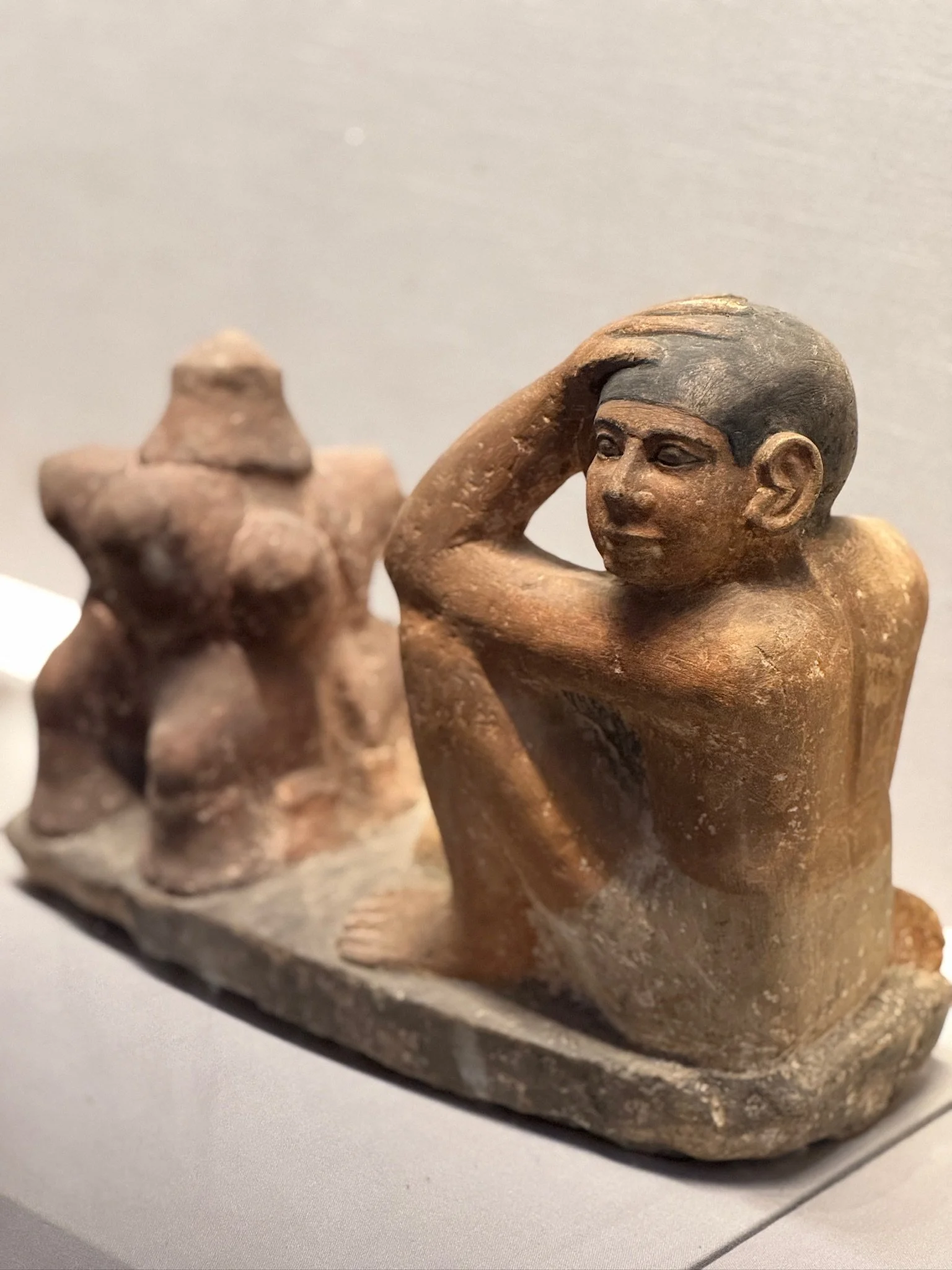
A baker protecting his face from the heat of the oven.
A woman grinding grain. A baker shaping dough. A sickle to harvest wheat. These aren't relics — they're reflections of something that has always defined us. Growing food, feeding each other, breaking bread together: these are the things that make us human. Not just in Egypt, not just in ancient times, but everywhere, always.
When we're out in the fields at Honoré Farm and Mill, we're not starting something new. We're stepping back into something as old as humanity itself. Where wheat is connection. Where bread is nourishment in the deepest sense. And, doing this work — being part of this story — feels like the most human thing of all.